Wipers Streaking and Smearing: Blade, Glass, or Arm?
Streaking wipers are usually dying rubber, but the glass and the arm spring share the suspect list. A beam blade from a reference maker fixes the common case, and this page starts with the two free checks that keep you from buying blades for a dirty windshield.
The short answer
Clean the glass first (free), check the arm's pressure (free), then replace with beam blades: Rain-X Latitude, which hold 4.8 stars from 1,159 ratings at Tractor Supply (November 2026). Beam frames press evenly where jointed frames lift at the ends, which is where your streaks live. Blades are a six-to-twelve-month consumable; this page will not pretend otherwise.
Why does this happen?
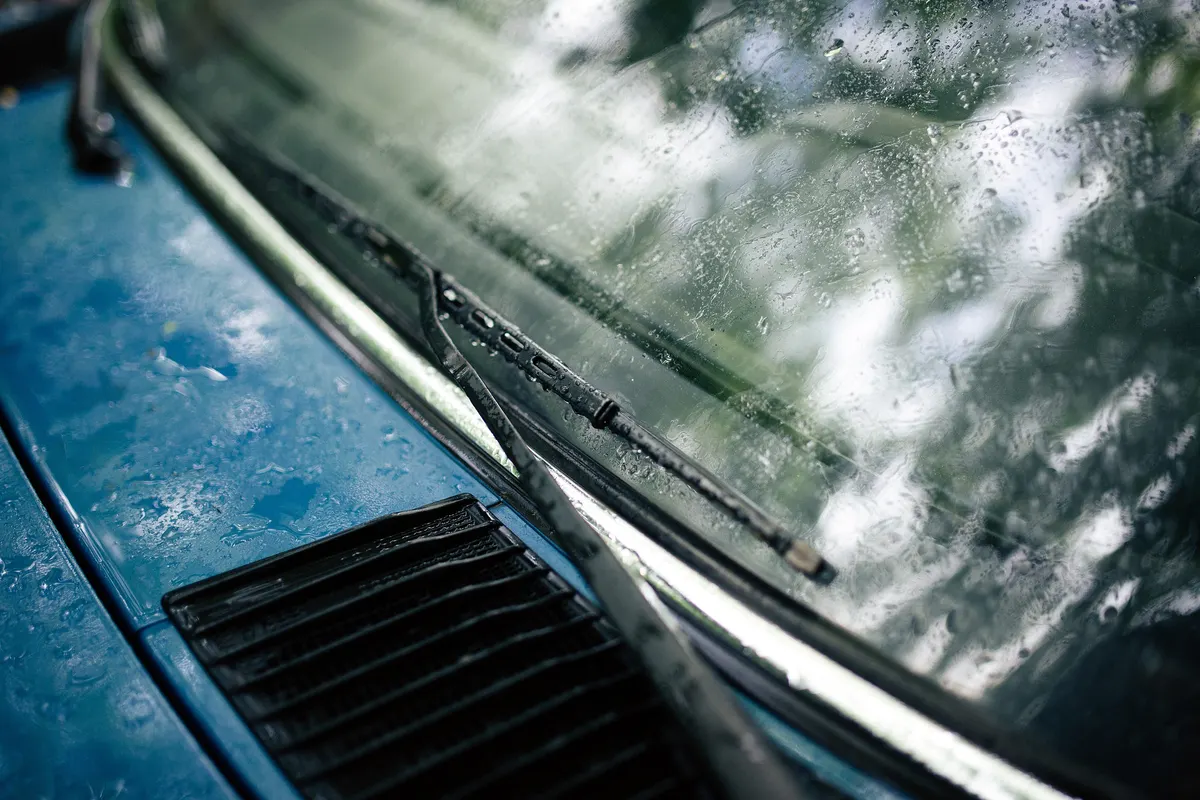
A wiper is a squeegee asked to work at speed on a curved, contaminated surface, and it fails in three places. The rubber edge ages: UV and ozone harden it, heat warps it, and ice tears nicks into it, until the edge that should be a crisp lip becomes a rounded smear tool. The frame fails differently: old jointed frames corrode at their pivots and distribute the arm's pressure unevenly, lifting at the ends and chattering in the middle, while beam blades use a sprung spine to press the whole length at once. And the glass itself is often the real cause, while the blades get blamed. Road film, wax from car washes, and silicone deposits make water bead and smear under a perfect blade. You can tell this is the cause if a thorough glass cleaning makes a 'bad' blade work properly again.
The streak pattern tells you the cause. Streaks at the same arcs on every pass mean edge damage at those points. A band left in the middle means pressure loss. Smearing everywhere, with fine misting, means film on the glass, or a blade so worn it spreads water instead of clearing it. Wiper arms complete the system: a bent arm or a tired spring reduces the pressure any blade can deliver, which is why the ladder checks the arm's snap before the wallet opens.
The fix, in order
In order, cheapest first. Stop at the step that solves it. The product step is the last resort, not the starting point.
Free step
Clean the glass like you mean it
Glass cleaner and a microfiber, then a second pass with a dry cloth. If the smearing stops, your blades were never the problem, and you have just saved about $40. Clay bar or a dedicated glass polish handles the stubborn film cases.
Free step
Test the arm and inspect the edge
Lift each arm: it should snap back to the glass with authority (a lazy arm is a spring or bend problem). Run a fingertip lightly along the old blade's edge. Nicks and a rounded edge are what cause the streaks.
The product step
Fit Rain-X Latitude beam blades, by the book
Match length per side (they often differ), use the adapter your car needs from the box, and seat the connector until it clicks. Beam blades' even pressure is the upgrade, curing the end-lift and mid-band patterns the jointed frame manufactured.
The product for this step
Rain-X Latitude wiper blades
Habit step
Run the consumable calendar
Replace at six to twelve months, sooner if streaks return. Clean the edges with a damp cloth monthly (grit caught under the edge causes streaks), and lift blades before forecast freezes or free them with de-icer; never force a frozen blade.
The evidence, in tiers
Tier 1 · The method
Beam-versus-jointed pressure distribution is measurable engineering, and the six-to-twelve-month blade life is the industry and safety-guidance consensus for rubber in UV exposure.
Tier 2 · This product
Rain-X Latitude holds 4.8 stars from 1,159 ratings at Tractor Supply (November 2026).
We have not worn out a test blade for this guide. The diagnostics are the trade's standard sequence, free to run in your own driveway.
Tier 3 · What owners report
Owners report that switching to beam blades ends the classic end-streak pattern immediately. Owners are divided on the Latitude's water-repellent edge: some love the beading at speed, some prefer plain rubber. That is a matter of preference, and this page leaves it there.
The alternatives, conceded where they win
| Option | What it is | The honest verdict |
|---|---|---|
| Rain-X Latitude beam blades | Even-pressure beam frame, treated rubber edge | The pick: it corrects both common failure geometries (edge wear gets new rubber; pressure loss gets the beam) in one consumable swap. |
| Conventional jointed blades | The older frame design, cheaper per unit | Wins on price for flat, older windshields whose curvature is mild; it loses on modern curved glass, where its pressure map is the streak pattern this page diagnoses. |
| Silicone premium blades | Long-life silicone rubber at double the price | Wins on longevity in harsh sun (silicone outlasts rubber under UV, plausibly doubling service life); it loses on first cost for the average driver, for whom the calendar replacement of standard blades is already cheap insurance. |
The honest price comparison
Put the price next to what it buys: about $40 a year in blades, against the accident risk of poor visibility in wet weather. Against even a minor fender repair, the blade calendar is the cheapest safety system on the car.
Where it falls short
Below are the weaknesses from the product's own record: where buyers say it falls short, in their numbers.
- Beam blades cannot fix low arm pressure or damaged glass, and the free checks exist because a meaningful minority of streak complaints are not the blade's fault.
- The water-repellent edge treatment wears over months, so the beading bonus fades before the blade's wiping life ends; judge it as a bonus, not the product.
- Sizing errors are common (driver and passenger lengths differ on most cars). A blade that is an inch too long lifts at the edge and causes the very streak you replaced it to cure.
The product, in short
Rain-X Latitude wiper blades
Questions people ask next
How do I know my blade sizes?
The store's lookup (by year, make, model) or your manual; measure the old ones as a cross-check, per side. Guessing from memory buys the wrong inch often enough that the check is part of the method.
Why do they chatter instead of streaking?
Chatter (skipping and juddering) is usually a blade angle or arm twist issue, or a dry, film-coated glass increasing friction past the blade's compliance. Clean the glass first, check the arm's alignment, and a new blade on a twisted arm chatters in perfect health.
Should I replace the rear wiper too?
On the same calendar, yes: it is the forgotten blade on hatchbacks and SUVs, and it is also the cheapest. Its streaks announce themselves in the mirror all winter if you let them.
Do winter blades matter?
In real snow country, yes: winter blades' booted frames resist the ice packing that paralyzes jointed frames, and beam blades share much of that advantage natively. In mild climates they are a marketing season, not a need.
Wiper engineering on beam pressure distribution; safety guidance on blade replacement intervals · Tractor Supply product record for Rain-X Latitude (November 2026)
The Fix JournalCase 02Car & Fabric