House Flies Everywhere Indoors
A sudden indoor fly population has a source: something died, rotted, or fermented within range, or a window's worth of flies found a gap. The fix is finding that source and a light trap for the stragglers, not a swatter campaign.
The short answer
Hunt the source before you hunt the flies: check for a dead rodent in a wall void, a forgotten trash or compost caddy, and drain and garbage areas, then plug in a Zevo trap to clear the airborne remainder. Zevo holds 4.6 stars from 18,549 ratings at Target (November 2026). Once you have found and removed the source, a trap just mops up the flies that remain. Without the source removed, a trap only shows you the problem going on.
Why does this happen?
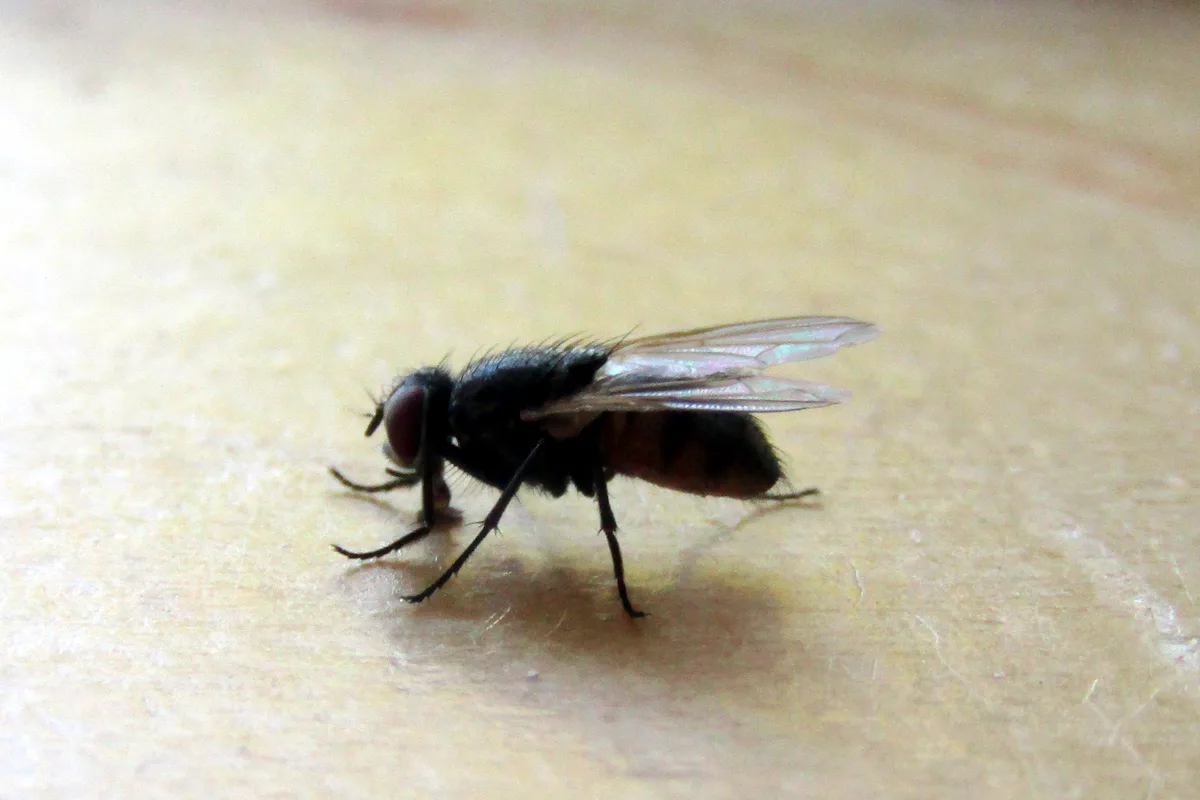
House flies breed in decaying organic matter: garbage residue, compost, pet waste, and, for the sudden autumn-feeling outbreaks, a rodent that died in a wall or attic after poison or misadventure, whose carcass can produce flies for weeks. In summer, most indoor flies are simply immigrants through open doors and gaps, a flow problem rather than a breeding problem, and the two cases need different answers: sanitation and source removal for breeders, exclusion and capture for immigrants.
Cluster flies complicate the picture seasonally: they enter in autumn seeking overwintering voids in walls and attics, emerging on warm winter days in slow, confused numbers. They breed outdoors in earthworms, not in your house, so no indoor cleaning reaches their source. The answer is sealing entry points and trapping the ones that emerge. In this case the trap below is the main tool, not just the mop-up.
The fix, in order
Cheapest first, in order. When a step solves it, you are done; the product step is for the cases the free steps cannot finish.
Free step
Diagnose by pattern, in five minutes
Flies at one window only: immigrants or cluster flies. Flies thickest near trash, drains, or one wall: a source nearby. Waves over weeks with a faint sweet-rot smell: carcass. The pattern chooses the rest of the ladder.
Free step
Remove the source you find
Scrub the trash and compost caddies, clean the drains, handle pet waste, and wash the residue in the garbage area. The film under the bag is the classic source. For the carcass case: no removal is practical, and the step is sealing the room-side gaps the flies use to enter living space.
The product step
Plug in the Zevo on the flies' route
Between the source zone and the living space, or at the window the immigrants use, a Zevo trap harvests adults continuously, including the sleepy cluster flies that ignore swatters. Its cartridge gives you the count trend to judge by.
The product for this step
Zevo Flying Insect Trap
Habit step
Seal for next season
Window screens repaired, gaps at frames caulked, and the autumn cluster-fly entry points (soffit and siding gaps) closed in summer when the house is empty of them. Sealing during an occupation just traps the tenants in with you.
The evidence, in tiers
Tier 1 · The method
Source identification by fly pattern and species is the pest-management standard; light trapping for adult reduction is the same guidance's household tool.
Tier 2 · This product
The Zevo trap holds 4.6 stars from 18,549 ratings at Target (November 2026).
We have not sourced a fly outbreak for this guide. The diagnostic ladder is the professional's sequence, written for a homeowner's five minutes.
Tier 3 · What owners report
Owners of light traps say the cartridge tells the truth. A filling cartridge during a carcass event shows how much patience the case will take, and owners in cluster-fly country say the trap turns a winter-long annoyance into a count they can manage.
The alternatives, conceded where they win
| Option | What it is | The honest verdict |
|---|---|---|
| Zevo trap plus source work | Sanitation for breeders, capture for adults | The pick: it addresses the actual population dynamics instead of dueling individuals. |
| Fly sprays and swatters | Direct combat | Wins the visible battle hourly and loses the war daily, because adults are the population's most replaceable part. A swatter is a morale tool, honestly labeled. |
| Outdoor bait traps hung indoors | Putrescine bait jars | Loses indoors by design: they work by smelling like a breeding site, which outdoors draws flies away from doors and indoors draws every fly in the county to your kitchen. A good product used in the wrong season. |
The honest price comparison
The honest comparison is a pest visit at $75 and up that, for a carcass or cluster case, delivers this same advice with a trap sold at markup. The $20 trap and an hour of source hunting reproduce it.
Where it falls short
What follows is drawn from the product's own reviews: the complaints and failures buyers report after living with it.
- It cannot remove a carcass from a wall void; it manages the emergence while nature finishes, and weeks of patience are part of that case's honest price.
- Cartridges fill fast during peak emergence; the consumable rhythm is the cost of the mop-up phase.
- It catches light-drawn adults; a breeding source in a dark void still needs the source step, as ever.
The product, in short
Zevo Flying Insect Trap
Questions people ask next
Why are they all at one window?
Flies navigate to light to exit; a window gathering usually means they emerged indoors (or entered) and are trying to leave. That pattern argues cluster flies or a void carcass over a kitchen source, and the trap belongs at that window.
The flies are slow and dumb in winter. Cluster flies?
Exactly the profile: large, sluggish, appearing on warm days from walls and attics. Seal next summer; trap this winter; and no indoor sanitation will find their source, because it is outdoors in the soil.
Do the sticky ribbons from the hardware store work?
They catch flies honestly and look like a tavern in 1970 doing it. The Zevo's advantage is presentation and the enclosed cartridge; the mechanism (capture adults) is the same family. Choose by your tolerance for the aesthetic.
When does a fly problem mean call someone?
Sewage-note flies, flies in a food business, or numbers that survive source removal and a month of trapping. Those three are professional diagnoses, not bigger traps.
Pest-management guidance on house fly and cluster fly identification and control · Target product record for the Zevo Flying Insect Trap (November 2026)
The Fix JournalCase 18Home Systems