Pool Test Strips Don't Agree With Each Other
Two strips from the same tub give two different answers, the pool shop gives a third, and every other pool decision waits on a number you can trust
The short answer
Strips disagree because matching a color by eye is a guess, and the guess changes with light, timing, and the strip's age. A drop kit ends the guessing for chlorine: you add drops until the sample turns clear, and the count is the reading. The Taylor K-2006 uses that method and is the kit pool shops and service techs carry. Taylor's own guide calls it the complete kit for weekly care, with drop count accuracy for free and combined chlorine. No large store rating for this kit is printed on this page, because none was read at a store for this guide. The case for it rests on the method and the maker's record, printed below.
Why does this happen?
A test strip asks you to match a wet pad's color to a chart. The color keeps changing after the dip, the chart's shades sit close together, and sunlight and pool light shift what your eye sees. Two people reading the same strip often pick two different shades, and two strips from one tub can land a full step apart on chlorine.
Chlorine is the number every other decision hangs on: shock or not, swim or not, add stabilizer or not. A reading that is off by a wide margin sends owners adding chemicals the water does not need, or swimming in water that is not ready. The cost of a wrong number repeats all season.
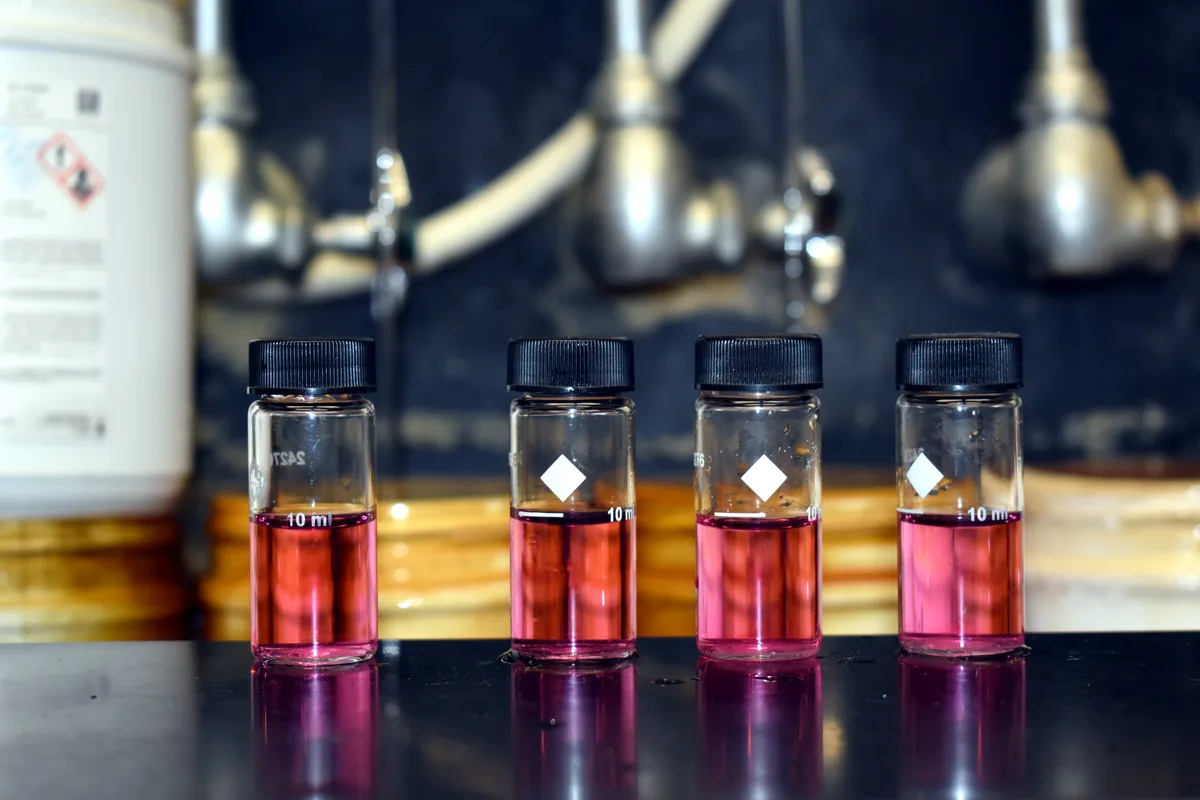
Drop counting removes the eye from the chlorine test. The sample starts pink, you add drops one at a time, and the drop that turns it clear gives the reading in small, even steps. The same test also reads combined chlorine, the used up chlorine that makes eyes sting and water smell, which strips blur into one total figure.
The fix, in order
Cheapest first, in order. When a step solves it, you are done; the product step is for the cases the free steps cannot finish.
Free step
Test one sample three ways and compare
Fill one clean cup from elbow depth. Run a strip, then a second strip from the same tub, and write both readings down. The gap between them is your strip error, measured on your own water. Most owners who do this once stop arguing with the strips and start shopping for a drop kit.
The product step
Run the full panel with the Taylor K-2006
Work through the kit in its printed order: free chlorine by drop count, then combined chlorine, pH, alkalinity, hardness, and stabilizer. Write the numbers in a notebook or phone note with the date. The kit's book walks each test in plain steps, and the first full run takes longer than the weekly ones that follow.
The product for this step
Taylor K-2006 Complete test kit
Habit step
Test on a weekly rhythm and log it
Test chlorine and pH twice a week in the swim season and the full panel weekly. A log turns surprises into patterns: you see chlorine demand rise with heat and use, and you catch a falling number before the water turns.
The evidence, in tiers
Tier 1 · The method
The method follows the maker's own testing guidance: liquid drop kits give a more detailed and exact read than strips, titration counting gives the chlorine figure without color matching, and free and combined chlorine are read apart because they call for different responses. Pool care guidance from health authorities names the same ranges this kit reads.
Tier 2 · This product
Taylor's own store describes the K-2006 as its complete kit for weekly home care, separating free and combined chlorine with exact drop count readings, at one drop to two tenths of a part per million. A specialist pool retailer lists the kit in stock with its full test panel (free and combined chlorine, pH, alkalinity, hardness, and stabilizer). A hands on test program that ran ten kits named this kit its top pick for precision. No star rating from a store is printed for it here, because the figures in circulation come from marketplace listings that were not read at the store for this guide.
This pick rests on method and maker record rather than a rating count, and the page says so plainly. The method advantage is checkable at home in one afternoon with the three way test in the ladder: your own strips, disagreeing on your own water, make the case no score can.
Tier 3 · What owners report
Owners who switch from strips describe the same change: numbers that repeat from test to test, and chemical buys that drop because the water stops being dosed on guesses. The complaints are about pace and upkeep: a full panel takes minutes, not seconds, and the liquid reagents expire and need replacing, unlike a tub of strips.
The alternatives, conceded where they win
| Option | What it is | The honest verdict |
|---|---|---|
| Taylor K-2006 Complete kit | Drop kit with drop count chlorine and a full balance panel | The pick where numbers drive the season: exact chlorine, combined chlorine read apart, and every balance figure in one case. |
| Taylor K-2005 kit | The same panel with color match chlorine instead of drop count | Cheaper at the maker's store and fine where a rough chlorine figure is enough. It gives back the color matching problem this page exists to end, for the one test that matters most. |
| TF-100 test kit | A drop kit built around the same reagents, sold by a specialist shop | A fair rival with the same drop count method, named here for owners who find it in stock first. Its store record was not read for this guide, so it is offered on method, not on a score. |
| Test strips | Dip pads read against a color chart | The honest budget row: fast, cheap, and good enough for a quick daily glance at a pool that is already balanced. Their limits are this page's subject, and they should not steer dosing on their own. |
The honest price comparison
Price the kit against a season of chemicals bought on wrong numbers. One unneeded shock routine costs more than the strips ever saved, and the kit's reagents, replaced as they expire, run for seasons.
Where it falls short
What follows is drawn from the product's own reviews: the complaints and failures buyers report after living with it.
- It is slower than strips. A full panel takes several minutes of counting and rinsing, and owners who test daily may keep strips for the glance and the kit for the weekly truth.
- The reagents expire. Bottles carry dates, readings drift as they age out, and replacements are an ongoing small cost strips do not have.
- No large store rating stands behind it on this page. The recommendation rests on the method, the maker's own record, and a hands on test program, and readers who buy on owner counts should know that before they spend.
- It reads the water; it does not fix it. Owners still face the chemical decisions, now with true numbers. A pool with failing equipment will test accurately and stay hard to balance.
The product, in short
Taylor K-2006 Complete test kit
Questions people ask next
Why do two strips from the same tub disagree?
Each pad's color depends on dip time, drain time, light, and the age of the tub. Any one of those shifts the shade you match, and the chart's steps are wide. The disagreement is built into the method, not a bad tub of strips.
What is combined chlorine and why does it matter?
Combined chlorine is chlorine that has done its work and bound to waste in the water. It is the share that smells like a pool hall and stings eyes. Strips blur it into one figure with free chlorine; the drop test reads it apart, and high combined chlorine is the signal to shock.
How often should I run the full panel?
Weekly in the swim season is the maker's rhythm for home pools, with quick chlorine and pH checks in between. Test after heavy rain, a pool party, or any water change, since all three move the numbers at once.
Are digital testers a better step up?
Handheld digital meters read one or two figures well and need calibration and care. For a home pool that needs the full panel, the drop kit covers more figures for less money, which is why pool shops still run drops at the counter.
Taylor Technologies product and testing guidance for the K-2006 kit (November 2026) · EZ Pool and Spa Supply listing record for the Taylor K-2006 (November 2026) · Hands on pool test kit program naming the K-2006 its top pick for precision (November 2026)
The Fix JournalCase 44Home Systems