Toilet Keeps Running: The $3 Part Behind Most Cases
A running toilet is usually not broken in an expensive way: it is a worn flapper leaking tank water into the bowl, twenty-four hours a day, and the repair is a universal part, two clips, and no tools or plumber.
The short answer
Put a few drops of food coloring in the tank, wait 15 minutes without flushing, and look at the bowl: colored water means the flapper leaks, and a Fluidmaster PerforMAX replacement is a five-minute, no-tools fix. The line holds 4.3 stars from 3,745 ratings at Walmart (November 2026). One running toilet can waste more water than your whole household drinks.
Why does this happen?
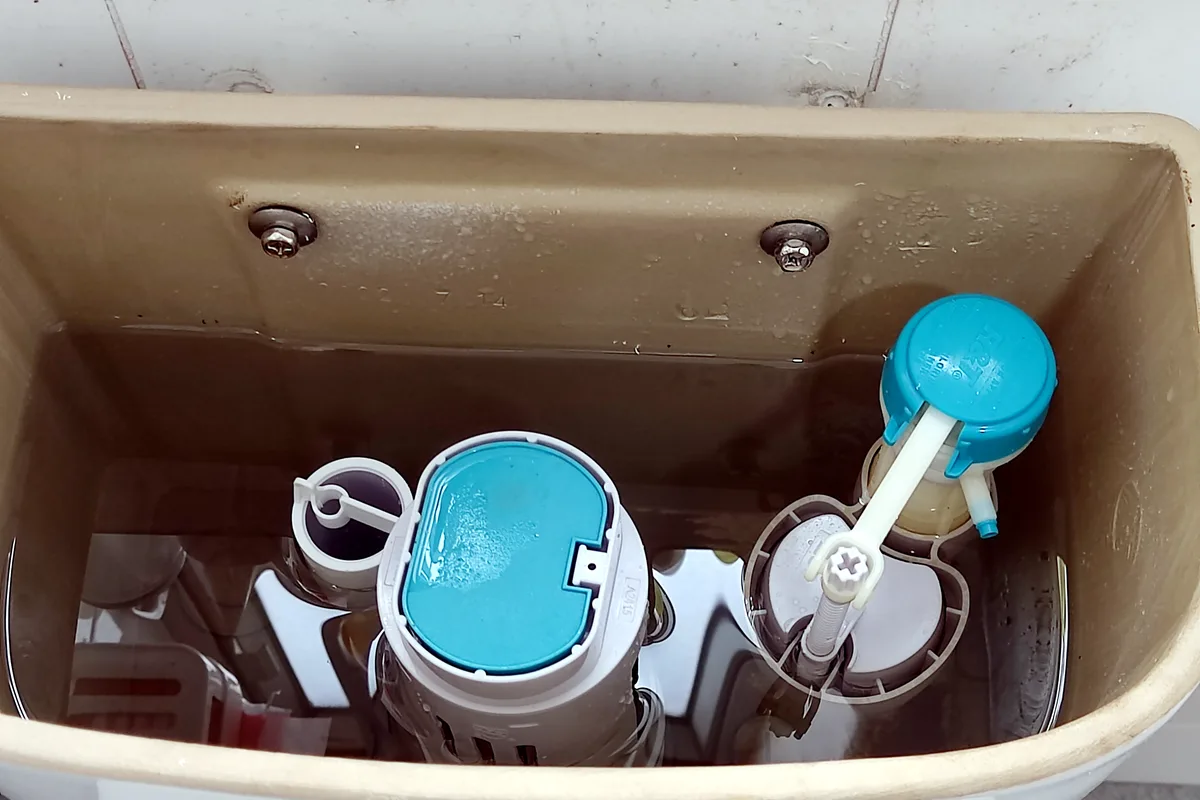
A toilet tank is a simple machine: a fill valve admits water to a set level, and a flapper seals the flush valve at the tank's floor until the handle lifts it. Running happens when the seal fails (the flapper's rubber warps and hardens with chlorine exposure over three to five years) or when the level fails (the fill valve's float sticks or its seal wears, and water spills silently down the overflow tube). Both failures silently send water from your supply to the sewer, hundreds of gallons a day in bad cases. You notice only on the water bill, and in the faint hiss or phantom refill.
The two failures are distinguished by the dye test and by looking: dye in the bowl without flushing convicts the flapper; water visibly trickling over the overflow tube's rim convicts the fill level. Each has a universal replacement part because tank internals standardized decades ago, and both repairs are designed for homeowners: the flapper unclips, the fill valve swaps with one nut and no plumber's license anywhere in the story.
The fix, in order
Cheapest first, in order. When a step solves it, you are done; the product step is for the cases the free steps cannot finish.
Free step
Run the dye test
Food coloring in the tank, wait 15 minutes, do not flush. Color in the bowl: flapper. No color, but the tank level sits at or over the overflow rim: fill valve adjustment or replacement. This test is the entire diagnosis and costs a drop of dye.
The product step
Replace the flapper (the common case)
Water off at the angle stop, flush to empty the tank, unclip the old flapper, clip the new one, set the chain with a half inch of slack. Water on, test flush, dye test again if you want the receipt. About five minutes.
The product for this step
Fluidmaster PerforMAX universal fill valve and flapper kit class (PerforMAX repair parts)
The product step
Replace the fill valve if the level is the fault
Same shutdown, one supply nut and one locknut, the PerforMAX set to the tank's marked waterline. Universal fit covers most tanks; a 3-inch flush valve or a one-piece designer toilet may need its maker's part, the one honest exception.
Habit step
Listen once a month
A healthy toilet is silent between flushes. A phantom refill (the tank topping itself up for ten seconds, unprompted) is the flapper announcing its retirement months in advance; catch it then, not on the annual water bill.
The evidence, in tiers
Tier 1 · The method
The dye test and the two-part failure model are the plumbing trade's standard first-line diagnosis, also published by water utilities (the EPA's WaterSense program documents running-toilet waste volumes).
Tier 2 · This product
The Fluidmaster PerforMAX line holds 4.3 stars from 3,745 ratings at Walmart (November 2026). Fluidmaster is the dominant OEM supplier of toilet internals, which is its own credential for fit.
We have not rebuilt a test toilet for this guide. The procedure is the trade standard, written to be followed by a first-timer.
Tier 3 · What owners report
Owners report the flapper swap as the canonical easier-than-feared repair, and the savings reports (water bills dropping by a visible fraction) as the receipt. Failures gather on chain slack set wrong: too tight leaks, too loose tangles. The half inch of slack in the step is the whole craft.
The alternatives, conceded where they win
| Option | What it is | The honest verdict |
|---|---|---|
| Fluidmaster PerforMAX parts | Universal replacement of the two wear parts | The pick: standardized fit, hardware-aisle price, and instructions written for exactly this Saturday-morning job. |
| A plumber's visit | Professional diagnosis and repair | Wins when there is water on the floor, a rocking base, or a one-piece toilet with proprietary internals; it loses at $150 and up for a flapper, which is lighting money on fire politely. |
| A new toilet | Replacement of the whole fixture | Wins when the porcelain is cracked, the toilet is ancient and inefficient, or you are remodeling anyway; as an answer to a running sound it replaces a $3 seal with a $200 fixture and a wax ring you did not need to meet. |
The honest price comparison
The honest comparison is the water itself: a moderately running toilet wastes roughly 1,000 gallons a week at typical leak rates, which shows up as $10 to $30 a month on metered bills. The part pays for itself before the next bill arrives.
Where it falls short
What follows is drawn from the product's own reviews: the complaints and failures buyers report after living with it.
- One-piece and designer toilets can use proprietary internals that universal parts do not fit; the maker's part number then governs, at maker prices.
- The fill valve swap involves the supply connection; a corroded angle stop that will not close fully turns a small job into a bigger one, and forcing it is how floods start.
- It fixes the tank. Bowl leaks through a cracked trapway are internal and invisible, diagnosed by dye appearing in the bowl with a new flapper fitted: that toilet is done.
The product, in short
Fluidmaster PerforMAX universal fill valve and flapper kit class (PerforMAX repair parts)
Questions people ask next
Why does it run only sometimes, at night?
Temperature: water pressure in municipal lines rises at night when demand falls, and a marginal flapper or fill valve that seals at daytime pressure weeps at night pressure. The intermittence is a clue, not a comfort.
The handle has to be jiggled. Same problem?
Usually the chain: too much slack lets it slip under the flapper, or the handle's nut has loosened. Adjust the chain to a half inch of slack first; it is the free cousin of the flapper job.
How long do flappers last?
A flapper lasts three to five years in chlorinated municipal water, and less with in-tank bleach tablets, which keep the rubber sitting in chlorine all the time and are banned from this page's tanks for that reason. Bowl cleaners belong in the bowl, applied by hand.
Is the universal valve really universal?
For standard two-piece toilets, essentially yes; the exceptions are one-piece and some designer models. Five minutes with your tank's measurements at the store settles it before money moves.
EPA WaterSense guidance on toilet leaks and the dye test · Walmart product record for Fluidmaster PerforMAX (November 2026)
The Fix JournalCase 05Home Systems