Wasp Nest on the House: When to Spray and When to Call
A small, new paper wasp nest in a low-traffic spot can be handled at dusk with a long-range spray and a clear exit path. A large nest, a nest in a wall void, or any nest near someone allergic is a professional's job, and this page's first job is telling you which you have.
The short answer
Decide before you spray: small exposed nest, no allergy in the household, a clear retreat path: treat it at dusk with Spectracide PRO from its full label distance. It holds 4.5 stars with 81 percent of owners recommending it at Walmart (November 2026). Nest in a wall, nest overhead at a doorway, or any sting allergy in the house: skip the can and call a professional. That triage is this page's main content.
Why does this happen?
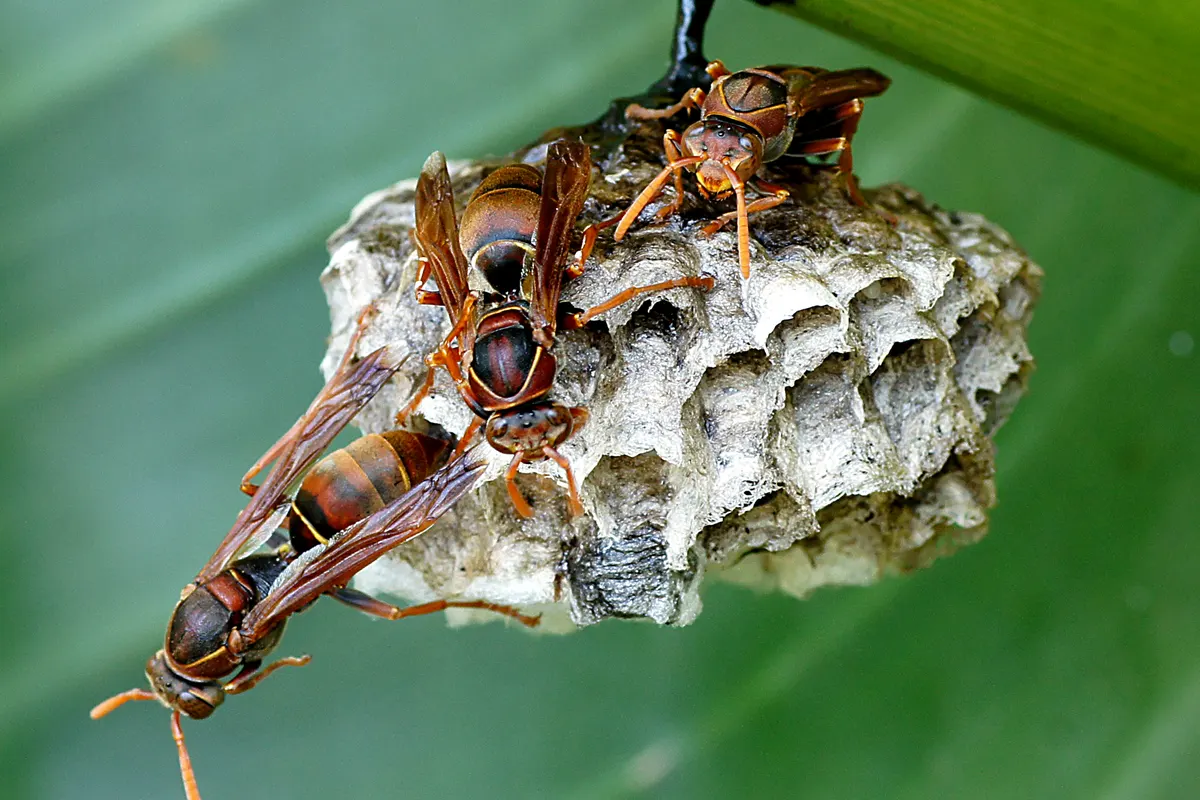
Paper wasps and hornets defend a nest, not a territory: the danger zone is the nest's immediate radius and it shrinks to near zero a few yards away. Colonies grow through the season, from a queen's spring start to hundreds of workers by late summer. That is why timing matters so much: a May nest the size of a walnut is one evening's work, and the same nest in August is a defensive population. Wasps are also least active and all home at dusk and after dark, which concentrates the colony in the nest for treatment and removes the foragers who would otherwise return to a treated nest and relocate the war to you.
The spray's design is distance: a jet stream rated to the mid-twenties of feet, so treatment happens from outside the defense radius, and a fast-knockdown formulation, because a slow one gives the colony time to launch. The second label property matters as much: residual action on the nest kills returning foragers over the following day, which is why you treat and leave, rather than treating and immediately knocking the nest down.
The fix, in order
Cheapest first, in order. When a step solves it, you are done; the product step is for the cases the free steps cannot finish.
Free step
Identify and size up, from a distance, in daylight
Paper umbrella under an eave: paper wasps. Enclosed football with a single entrance: hornets or yellowjackets. Mud tubes: mud daubers, near-harmless and usually left alone. Size and traffic count set the plan per the triage above.
Free step
Wait for dusk, dress covered, plan the exit
Long sleeves, covered legs, no flashlight beam held at your face (aim light at the nest from the side or use a red filter). Your retreat path is walked in advance, not improvised. Bystanders and pets inside.
The product step
Soak the nest from full distance
Spectracide PRO sprayed from its label distance, aimed at the nest's entrance and body, soaking it thoroughly, then leave. Do not stand under the nest, do not knock it down yet, and do not treat in wind that carries the jet (or the wasps' alarm) toward you.
The product for this step
Spectracide PRO Wasp and Hornet Killer
Habit step
Verify, remove, and close the site
After 24 hours with no traffic, knock the nest down and dispose of it. Next spring, the prevention is a weekly glance: a walnut-sized starter nest removed in May (or discouraged with a smooth-surface wash) never becomes August's problem.
The evidence, in tiers
Tier 1 · The method
Dusk treatment, distance, and nest-removal timing are the extension-service standard for stinging insects; the identification distinctions (paper wasp versus hornet versus bee) come from the same guidance.
Tier 2 · This product
Spectracide PRO Wasp and Hornet Killer holds 4.5 stars with 81 percent of owners recommending it at Walmart (November 2026). Label distance and knockdown claims quoted are the label's own.
We have not treated a nest for this guide, and this page is deliberately triage-first: the product is step three of four, behind identification and the call-a-professional gates.
Tier 3 · What owners report
Owner failures in the review record repeat the same three shapes: treated at midday with foragers out, treated from underneath, or treated a wall-void nest and met the colony indoors. Every one of those cases comes from skipping the identification step, which is why this page spends so much of its length on it.
The alternatives, conceded where they win
| Option | What it is | The honest verdict |
|---|---|---|
| Spectracide PRO spray, dusk, on a qualifying nest | Long-range knockdown plus residual at the nest | The pick inside its limits: small, exposed, low, no allergy, and a clear retreat path. Inside those limits it is a $7 solution to a $150 call. |
| A pest professional | Assessment, treatment, and removal, guaranteed | Wins every case in the triage list and every nest above grapefruit size. The honest default whenever this page's questions make you hesitate; hesitation at a wasp nest is data. |
| Soapy water in a sprayer | Home remedy knockdown | Wins on a tiny nest at arm's length in tests (soap wets wings and suffocates), and loses on distance: the delivery puts you inside the defense radius, which is the entire hazard the canned jet exists to avoid. |
The honest price comparison
The honest comparison cuts both ways, and the page holds both: a professional nest treatment runs $150 to $300, which buys real safety for the cases that need it, and a $6 to $9 can is the proportionate answer for the small eave nest most readers actually have. Choosing wrongly in either direction is the waste.
Where it falls short
What follows is drawn from the product's own reviews: the complaints and failures buyers report after living with it.
- It is a pesticide jet: wind, overspray onto gardens and water, and label precautions govern, and pollinators forage near eaves too, another reason treatment is at dusk.
- It cannot treat void nests, and spraying them is actively harmful (wasps retreat inward, into the house). The can does not know your nest's architecture; the triage step must.
- Dead nests left hanging are re-colonized less often than folklore says, but old nests do attract scavenging insects; removal after verification is part of the method, not cleanup vanity.
The product, in short
Spectracide PRO Wasp and Hornet Killer
Questions people ask next
Wasps or bees: how do I tell?
Wasps are smooth, shiny, and narrow-waisted; honeybees are fuzzy and amber. Bees at a hive-like cluster on a branch are a swarm resting, not a nest: leave them and call a beekeeper if they linger. When in doubt, photograph from distance and ask your extension service before any spray is bought.
The nest is in my wall. I can hear buzzing. The can says it kills on contact, so?
So the triage answer stands: professionals, promptly. Spraying a void opening seals the exit and sends a dying, angry colony through your interior walls. It is the most expensive mistake people make with this problem, and they make it with a $7 can.
What about the decoy nest bags people hang?
Evidence is thin and mixed; territorial species may avoid a convincing fake, but this site does not recommend products on folklore. The spring nest check in step four is free and certain.
A single wasp keeps getting into the house. Nest?
Probably not: single scouts enter through gaps and window frames. Seal the gaps (this family's barrier page covers the routes) and the pattern usually ends without any nest being found, because there is none.
University extension guidance on wasp and hornet nest treatment and identification · Walmart product record for Spectracide PRO (November 2026); product label
The Fix JournalCase 13Home Systems