How to Stop a Cat Scratching the Furniture
Scratching is not misbehavior; it is claw maintenance, stretching, and scent-marking that a cat cannot be talked out of. You do not stop scratching, you relocate it, onto a post that beats the couch on the cat's own criteria.
The short answer
Give the cat a better target, placed where the scratching happens: the Pioneer Pet SmartCat Ultimate post, 32 inches of stable sisal that allows a full upright stretch. It holds 4.6 stars from about 3,999 ratings on Chewy (November 2026). In the 2022 Animals journal survey of 2,465 US and Canadian cat owners, 58 percent reported scratching on off-limits objects. That tells you the couch loses in most houses for the same fixable reasons.
Why does this happen?
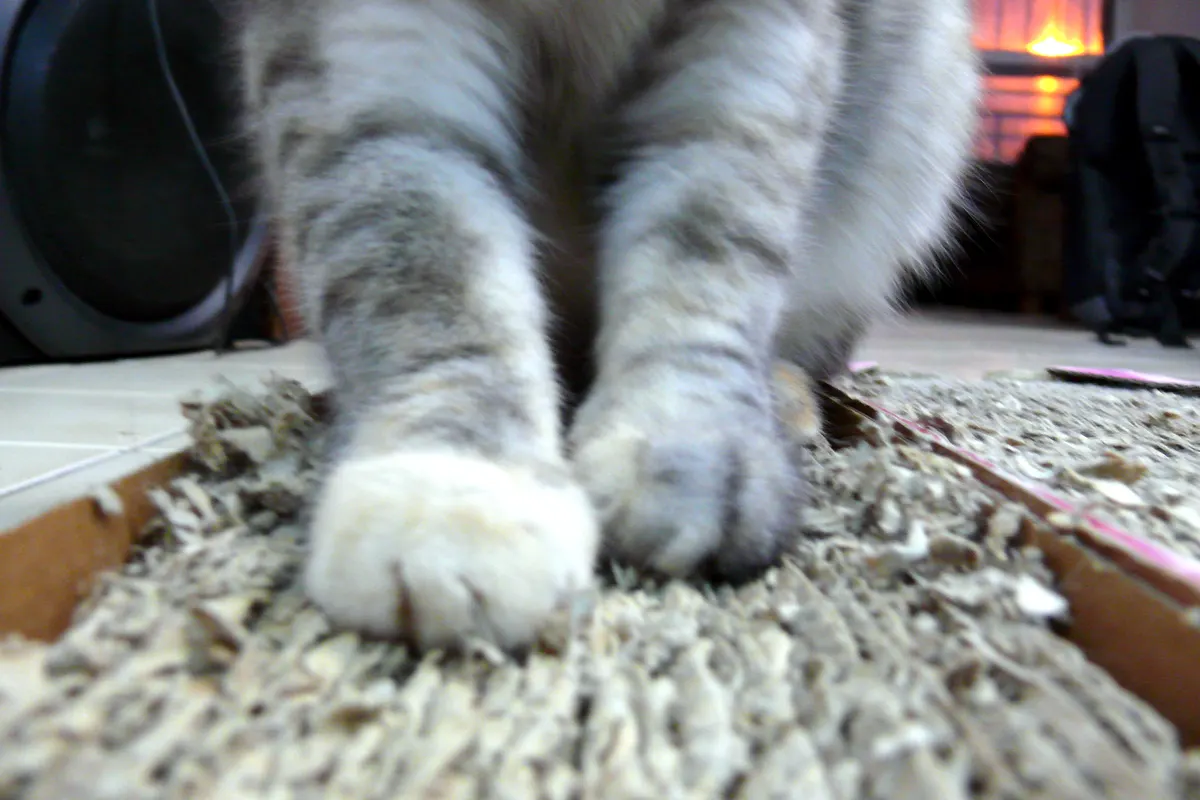
Cats scratch to shed claw sheaths, to stretch the shoulder and back muscles after sleep, and to mark territory with the scent glands between their toes, a signature they renew where they have placed it before. A behavior with three biological functions does not get punished away. The household's only choice is about location. Cats choose locations by points owners rarely check: stability, because a post that rocks when leaned on is abandoned in a day; height, because a full stretch needs roughly 30 inches for an average cat; material, because sisal's vertical grain shreds in a satisfying way and holds scent; and position, near sleep areas and near the room's social center, not banished to a corner.
The furniture wins when it scores higher than the post on those points, which it usually does. A sofa arm is stable, tall enough, easy to shred, and sits exactly where the cat wakes and socializes. So the steps below start by removing the couch's advantages, with covers during retraining and the surface made unrewarding, while the post takes the couch's position. Deterrent sprays are not the lead tool here. Their record is weak and variable, and this page builds on the post and its placement, which is where the survey and behavior literature put the weight.
The fix, in order
The steps run in order, cheapest first. Stop at the step that works. The product comes last, and only where the free steps run out.
Free step
Audit the couch's winning features
Watch where and when the cat scratches: after waking, at the room's entrance, on the arm nearest your seat. You are not gathering guilt; you are writing the post's placement specification.
The product step
Install the Ultimate post at the scene
Put the SmartCat post beside the scratched furniture, not across the room, stable on its base. Rub catnip on it or use a wand toy to start the first scratches there. Reward the cat with attention, not just treats. A post introduced in the wrong room does not get used.
The product for this step
Pioneer Pet SmartCat Ultimate Scratching Post (32 inch)
Free step
Make the couch boring during retraining
A fitted cover or a throw over the target zone for two to three weeks, double-sided tape sheets on the favorite patch if needed, while the post collects the habit. Remove the protection gradually once the post is the established address.
Habit step
Maintain the claws and the post
Regular nail trims reduce the damage from any lapses. A post whose sisal has shredded to rope is doing its job. Replace it or re-wrap it before the couch starts looking better by comparison.
The evidence, in tiers
Tier 1 · The method
The 2022 survey in Animals (2,465 owners in the US and Canada) found 58 percent reporting off-limits scratching, establishing the behavior's normality; the relocation criteria (height, stability, material, placement) are the feline behavior literature's standard guidance.
Tier 2 · This product
The Pioneer Pet SmartCat Ultimate holds 4.6 stars from about 3,999 ratings on Chewy (November 2026). Its height and stability specifications are measurable facts, not marketing, and they are why this post is the pick.
We have not run a cat for this guide. The protocol is the behavior literature's standard, and the product step rests on specifications a buyer can verify with a tape measure.
Tier 3 · What owners report
Owners report the change plainly: cats that ignored short, tippy posts use this one because it allows the full stretch without moving. The failures name posts placed where the cat does not live its day, which the placement step in the ladder exists to prevent.
The alternatives, conceded where they win
| Option | What it is | The honest verdict |
|---|---|---|
| SmartCat Ultimate post, placed at the scene | Relocation onto a post that outscores the couch | Our pick: it changes the target by beating the couch on the cat's own points, which is the only method that lasts. |
| Deterrent sprays (bitter and citrus) | Making furniture taste or smell aversive | Wins for a single protected item for a short visit (a guest's suitcase corner); it loses as the system, with inconsistent feline response, reapplication forever, and no alternative offered the cat, which behavior guidance considers the missing half. |
| Cardboard scratchers on the floor | Horizontal scratching surfaces | The best choice for true horizontal scratchers, a real minority of cats, identified by rug and carpet scratching, and on price. It fails for the vertical majority, whose couch arms show their preference. |
The honest price comparison
Compare the sofa: reupholstering one arm or replacing a chair runs $200 and up, against one $60 to $70 post that serves for years. The behavior is free to keep. Only its location is for sale, and the post is that location.
Where it falls short
The weaknesses below are taken from the product's own review record. They are printed here because the recommendation is.
- It is a large object that must live where the cat wants it, which is in your room, not your storage plan; households that exile it have bought a monument.
- Some cats are horizontal scratchers and will ignore any post; the comparison's cardboard row is their answer, and the couch's scratch geometry tells you which cat you have.
- It does not work instantly: retraining takes two to three weeks of protected furniture, and households expecting a weekend cure rate it as a failure at day four.
The product, in short
Pioneer Pet SmartCat Ultimate Scratching Post (32 inch)
Questions people ask next
Why the couch and never the post I bought last year?
Check it honestly: too short for a full stretch, wobbles under weight, carpet-covered, because many cats dislike carpet posts, which do not shred like anything real, or parked in a dead corner. The couch scored higher on the cat's points. Fix the scores, not the cat.
Should I punish or spray water when I catch her?
No: punishment teaches timing (scratch when unobserved) and taxes the relationship, and the behavior is a need, not a defiance. Redirect to the post mid-act, calmly, and reward the post's use. The need gets an address; that is the whole method.
What about nail caps?
Soft nail caps are a legitimate extra for some households. They are applied every few weeks and tolerated to different degrees, and they reduce damage while retraining runs. They are management, not the fix. A cat that fights having them applied is telling you to invest in the post and trims instead.
Two cats, one post?
Territorial marking multiplies with cats: behavior guidance is one post per cat plus one, placed at separate social nodes. A single contested post can become the thing they scratch around, on your furniture.
Animals (2022) survey of 2,465 US and Canadian cat owners on scratching behavior · Chewy product record for Pioneer Pet SmartCat Ultimate (November 2026)
The Fix JournalCase 02Pets