Carpenter Bees Drilling Holes in My Deck
Carpenter bees drill round holes in decks, eaves, and fences to build nesting galleries, and they patrol predictable routes around that wood each spring. A trap such as the Best Bee Brothers Carpenter Bee Turbo Trap 2.0 catches bees on those patrol routes, while existing galleries need separate treatment.
The short answer
Hang the Best Bee Brothers Carpenter Bee Turbo Trap 2.0 where bees patrol, at corners and eave ends, before spring drilling peaks. Its brand store record is 4.83 stars from 1,317 reviews (November 2026), and Bob Vila hands on testing named it best overall. A trap catches patrolling bees; it does not empty galleries already drilled.
Why does this happen?
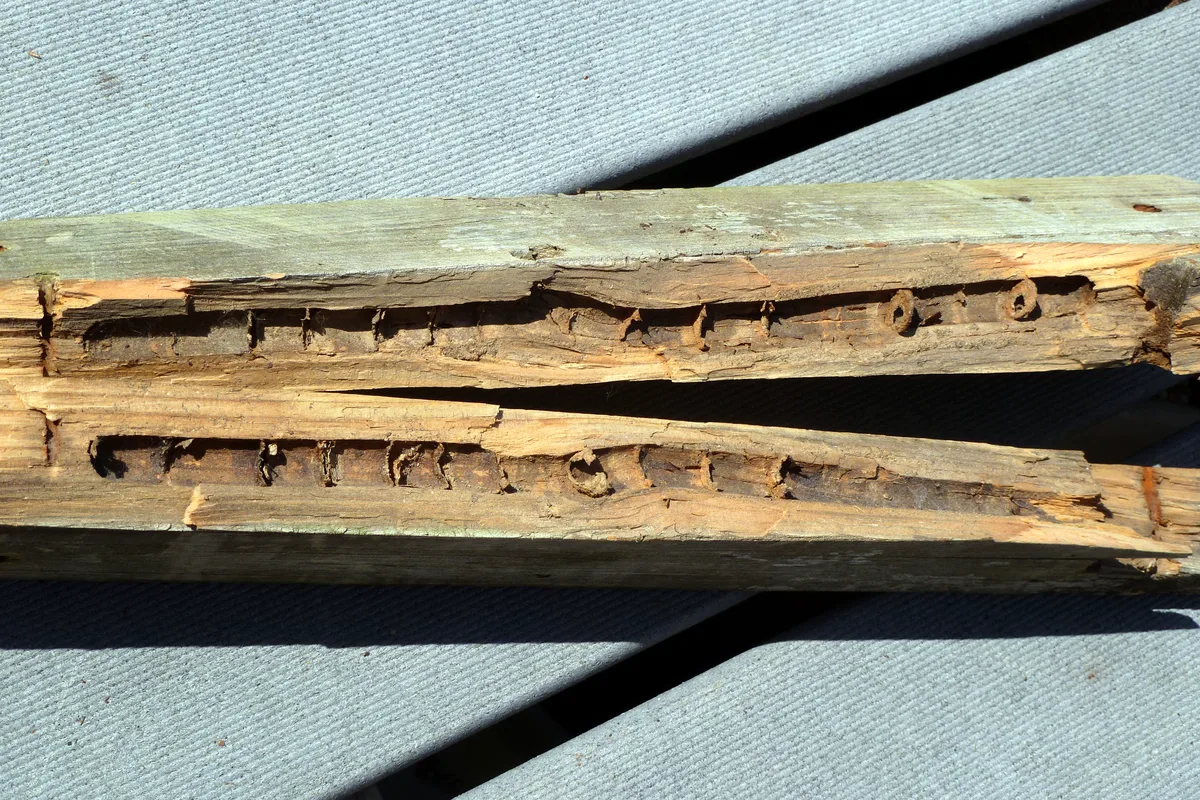
Carpenter bees look like bumblebees but nest alone in wood. A female drills a neat round hole into a deck rail, eave, fascia, or fence, then turns and tunnels along the grain to build a gallery where she lays eggs. The drilling itself is shallow damage at first, but galleries reused and extended over seasons, plus the woodpeckers that tear wood open hunting the larvae, turn a cosmetic hole into real repair work.
The bees are creatures of habit. They return to the same structures, patrol the same routes around eaves and corners, and investigate promising holes, which is the behavior a trap relies on. Placement decides the results: a trap hung on a patrol route catches bees all day, while one hung beside the nest holes can sit empty. Trapping reduces the local population season by season. It does not clear existing galleries overnight.
The fix, in order
Work down the list: free and cheap steps first. Stop when the plant turns the corner; the product is only for what the free steps cannot do.
Free step
Map the patrol routes before hanging anything
Watch the structure on a warm spring day and note where bees hover, patrol, and land: corners, eave ends, rail junctions, and sunny faces are typical. Note existing holes and any sawdust beneath them. Ten minutes of watching tells you where a trap belongs: on the route, not beside the most obvious hole.
The product step
Hang the Best Bee Brothers Carpenter Bee Turbo Trap 2.0 on the route
Hang the trap at the height and position the maker directs, on a corner or eave end where bees already patrol, before drilling peaks in spring. One trap per active structure face is a sensible start. Check it as directed and empty it as instructed so it keeps catching through the season.
The product for this step
Best Bee Brothers Carpenter Bee Turbo Trap 2.0
Free step
Treat and fill old galleries after activity ends
Once the season activity in existing holes has finished, treat the galleries with a suitable labeled dust or treatment as a separate step, then fill the holes with dowel or filler and paint or seal the surface. Filling alone while bees are active just moves the drilling. This closes the housing that draws bees back.
Habit step
Make the wood less inviting each spring
Keep deck, eave, and fence wood painted or sealed, since bees strongly prefer bare, weathered wood, and rehang traps each spring before patrols establish. Note which faces get drilled each year. A short spring routine protects the same structures season after season for the cost of paint upkeep.
The evidence, in tiers
Tier 1 · The method
The research method is placement on patrol routes rather than at nest holes, with the capture versus nest distinction stated plainly: trapping catches patrolling bees, and gallery treatment for existing nests is a separate step. Bob Vila hands on testing named this trap best overall.
Tier 2 · This product
The Best Bee Brothers brand store record is 4.83 stars from 1,317 reviews (November 2026), labeled here as brand direct evidence. Walmart marketplace listings for the trap carry no product ratings, which is why this page uses the brand store record and says so.
We have not hung a trap for this guide, and we have not tested this trap on a specific deck. The patrol route placement follows the bee behavior and the hands on testing named in the research.
Tier 3 · What owners report
Owners report traps catching well when hung at corners and eaves on active routes, and empty traps when hung beside nest holes or put up after the spring peak. Repeat seasons of trapping are commonly reported to reduce drilling on the same structure.
The alternatives, conceded where they win
| Option | What it is | The honest verdict |
|---|---|---|
| Best Bee Brothers Carpenter Bee Turbo Trap 2.0 | Wooden carpenter bee trap for patrol routes | The pick: a specialist trap with a large brand store record and a best overall result in Bob Vila hands on testing, made for this single problem. |
| Filling and painting holes alone | Dowel, filler, and paint on drilled wood | Wins as the finishing step every structure needs, and painted wood genuinely deters new drilling; it loses alone in spring, because the bees already present simply drill a new hole nearby while the old one is being repaired. |
| Spraying bees and holes with insecticide | Contact spray on active bees and entrances | Wins for a single aggressive situation needing an immediate knockdown at one hole; it loses as a season plan, because new bees keep arriving on the same routes and the wood stays just as inviting. |
The honest price comparison
The honest comparison is repairing fascia, rails, and eaves after galleries and woodpecker damage accumulate, or paying for repeated pest control visits each spring. Traps hung on the right routes, plus paint upkeep, sit at the small end of that cost.
Where it falls short
These weaknesses come from the product's own reviews, not from a rival's marketing. Read them before you buy.
- It does not empty existing nests, so drilled galleries still need their own treatment and filling step.
- Placement is everything: a trap hung in the wrong spot can catch little while drilling continues nearby.
- The strongest review record is the brand's own store, not an independent retailer, and Walmart listings carry no ratings.
- It works across a season and across years, not as a same week clearance of an active structure.
The product, in short
Best Bee Brothers Carpenter Bee Turbo Trap 2.0
Questions people ask next
Why is my trap hanging empty while bees drill nearby?
The usual cause is placement. Traps work on patrol routes, at corners, eave ends, and sunny faces bees cruise past, not beside the nest holes themselves. Watch the bees for ten minutes, move the trap onto that route, and catches usually change.
Are carpenter bees destroying my deck structurally?
A few holes are mostly cosmetic at first. The risk grows when galleries are reused and lengthened over seasons and when woodpeckers tear the wood open after larvae. Early trapping, gallery filling, and keeping wood painted keep a small problem from becoming a repair bill.
Will the trap catch honeybees or bumblebees?
The trap is designed for carpenter bees investigating nesting holes in wood, and placement near structures targets their patrol behavior. Check and release any accidental non target catch promptly, and site traps by the structure rather than near flowering plants where other bees feed.
When should I hang the trap?
Hang it in early spring, before or as patrol and drilling activity starts, so returning bees meet the trap while choosing nesting sites. Leave it up through the active season, empty it as directed, and rehang it the following spring as a routine.
Best Bee Brothers brand store review record for the Carpenter Bee Turbo Trap 2.0 (November 2026) · Bob Vila hands on testing of carpenter bee traps
The Fix JournalCase 26Plants & Garden