How to Get Rid of Fungus Gnats in Houseplants
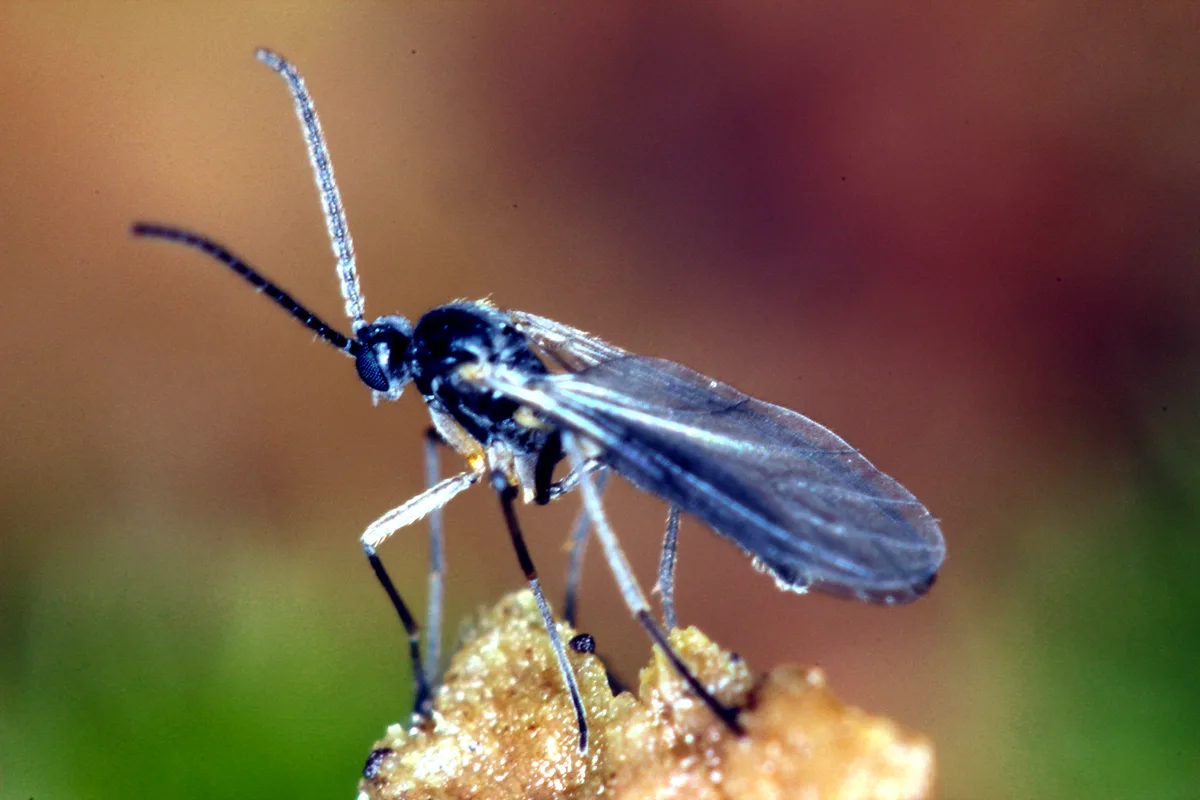
Fungus gnats live in the top inch of your plant's soil, not in the air: the adults are a nuisance, the larvae in the soil are the population. A bacteria called Bti, applied in the watering can, ends the larval stage and the cycle with it.
The short answer
Water with Bti: steep Summit Mosquito Bits in your watering can and water as usual, repeating weekly for three weeks, and the larvae in the soil die before they can become the next cloud of adults. The class is EPA-registered and extension-recommended for exactly this use. The Amazon-mirrored record for the 30 oz bag reads 4.5 stars from 951 ratings (November 2026). Yellow sticky traps catch the adults and show you whether the numbers are falling.
Why does this happen?
Fungus gnats are soil flies with a tidy life cycle: adults lay eggs in moist potting mix rich in organic matter; larvae spend about two weeks in the top layer feeding on fungi, decaying matter, and (in numbers, on seedlings and stressed plants) root hairs; pupae follow, then adults emerge to mate and lay for a few days. The visible cloud of adults is the shortest-lived stage. Killing adults alone leaves two weeks of larvae already in the soil to replace them. That is why households that spray see gnats 'come back' every two weeks, on what is really a timetable.
Bti is a specialist treatment: a naturally occurring soil bacteria whose proteins, eaten by larvae, destroy their gut lining. It works on mosquito and gnat larvae (and little else: it is notably safe for plants, pets, people, and beneficial insects), which is why public health programs use it in water supplies and extension services recommend it for houseplants. What matters is coverage and timing. Treat every plant in the room, because gnats move between pots. Repeat weekly to catch each new batch of eggs as it hatches. And let the soil surface dry between waterings, because larvae need the moisture that made adults choose the pot.
The fix, in order
Work down the list: free and cheap steps first. Stop when the plant turns the corner; the product is only for what the free steps cannot do.
Free step
Let the soil surface dry between waterings
Adults chose your pots for their moisture. Allowing the top inch to dry (for plants that tolerate it) makes the soil a poor nursery immediately and costs nothing. Bottom-watering sensitive plants keeps the surface drier still.
Free step
Deploy yellow sticky traps at soil level
Traps just above the soil catch emerging adults before they lay, and their count is your weekly measure. Heavy, then falling, then near zero means the treatment is working on schedule. Count the traps each week so you know, rather than guessing.
The product step
Water with Mosquito Bits tea, weekly, three weeks
Bits steeped in the watering can per the label (about a tablespoon per gallon, strained or left in a reusable tea bag), applied to every plant in the room, for three consecutive weeks to span the larval cycle and its egg cohorts. The Bits can also be sprinkled on the soil surface, where watering releases the Bti in place.
The product for this step
Summit Mosquito Bits (Bti)
Habit step
Audit the room's plant hygiene
Remove dead leaves from soil surfaces, empty saucers of standing water, and quarantine new plants for a week: most infestations arrive as eggs in a new plant's mix, and the welcome protocol prevents the sequel.
The evidence, in tiers
Tier 1 · The method
Bti's larvicidal action and safety profile are documented by the EPA (it is registered for use in potable water catchments) and extension services recommend Bits tea for houseplant fungus gnats by name.
Tier 2 · This product
The 30 oz Mosquito Bits bag shows 4.5 stars from 951 ratings on its Amazon-mirrored listing (November 2026). The class recommendation matters more than the listing: extension guidance names the active ingredient, and Summit's Bits are its standard household form.
We have not raised gnats for this guide. The protocol is the extension sequence, and the sticky traps let any reader verify its claims weekly.
Tier 3 · What owners report
Owners report the same three-week pattern. Adults persist at first, because they are the old generation dying off, while the trap counts fall. Households that treat one plant, or treat for one week only, report the gnats returning every two weeks, which the lifecycle above explains.
The alternatives, conceded where they win
| Option | What it is | The honest verdict |
|---|---|---|
| Mosquito Bits (Bti) in the water, plus traps | Larvicide in the soil, monitoring in the air | The pick: it breaks the cycle at the stage that is actually the population, with the safest chemistry in the category. |
| Neem oil soil drenches | Botanical insecticide and antifeedant | Wins on organic-garden preference and doubles as a foliar tool (see the roses page); it loses on consistency for gnats, on soil-microbe disruption at drench doses, and on the smell that makes indoor use a negotiation. |
| Hydrogen peroxide drenches (1:4) | Oxidizing soil flush | Wins on pantry price and gives a real knockdown of larvae on contact; it loses on repetition (no residual, weekly forever), on root and microbe stress at careless ratios, and on the discipline it demands compared with a weekly tea. |
The honest price comparison
Compare the costs with your plant collection. A season of gnats costs stressed plants and sometimes seedlings, against a $10 to $14 bag that treats a shelf of plants for months. The traps at a few dollars are how you measure progress, not an upsell.
Where it falls short
These weaknesses come from the product's own reviews, not from a rival's marketing. Read them before you buy.
- It is a three-week protocol with a lag: adults already flying live out their days, and impatient readers will call it failed at day five unless they read the trap counts instead.
- It only kills larvae that eat it in treated soil; plants you skip (the office fern, the bathroom orchid) remain nurseries and reseed the shelf.
- Overwatering defeats it culturally: soil kept permanently wet re-attracts laying adults faster than the cycle breaks, which is why the drying step comes first and is not decorative.
The product, in short
Summit Mosquito Bits (Bti)
Questions people ask next
Are the Bits safe around my pets and kids?
Bti's registration history includes use in drinking-water catchments and it is considered non-toxic to people, pets, and plants at label use. The granules themselves should still be stored like any garden product, out of reach, because common sense is also a safety system.
Can I leave the Bits in the soil permanently?
Yes, surface-applied Bits are a standard mode and refresh with watering; replace them as they decompose (monthly is a fair rhythm). The tea method gives more even dosing for a heavy infestation's first three weeks.
Why are they only on some plants?
Moisture and mix: the pots kept wettest, with the richest organic surface, are chosen first. The pattern is a watering audit delivered by insects: even out your watering and the preference disappears with the gnats.
The traps catch dozens but the plants look fine. Panic level?
Adults are mostly a nuisance to people; larvae damage seedlings and stressed plants at high densities and merely graze in healthy ones. Follow the treatment anyway, because the population grows fast, and the traps are telling you the current numbers, not a reason to relax.
EPA registration and extension guidance on Bti for fungus gnats · Amazon-mirrored product record for Summit Mosquito Bits 30 oz (November 2026)
The Fix JournalCase 01Plants & Garden