The Rainfly Wets Out in the Rain
Rain stops beading on the fly and starts soaking through the fabric, so the tent darkens, sags, and drips from the inside
The short answer
A fly that wets out has lost its surface finish, not its fabric. When the finish is healthy, rain beads and runs off. When it wears away with sun and dirt, water spreads into the weave instead, the fabric darkens and sags, and damp works through to the inside. A reproofing spray puts a new beading surface back on clean fabric. Nikwax Tent and Gear SolarProof holds 4.3 stars from 90 reviews at REI (November 2026), with 84 percent of reviewers on that record saying they would recommend it. One limit sits in the product's own record and belongs in this box: the treatment restores repellency, it does not create waterproofing. On a fly whose inner coating has cracked and flaked away, no spray will make it sound, and the check for that is in the steps.
Why does this happen?
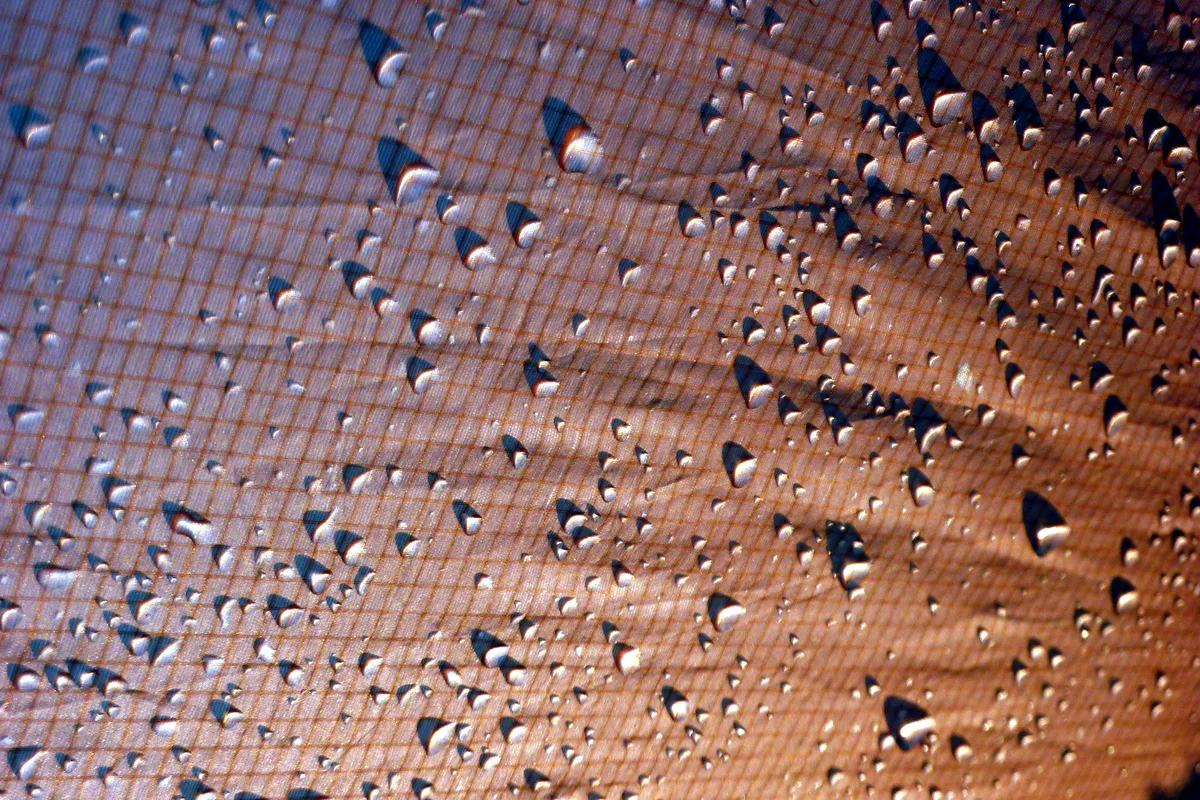
Tent fabric is a weave with two defenses. The outer face carries a repellent finish that makes water bead. The inner face carries a coating that blocks water under pressure. The outer finish is thin and takes the sun, the folding, and the dirt, so it fails first, often years before the tent is worn in any other way.
Wet out is what that failure looks like. Water stops beading and spreads across the weave, held there by the fabric itself. The fly gets heavy, sags onto the inner tent, and touches it, and each touch point passes damp across. Owners often read the result as a leak in the fabric. Most of the time the coating inside is still working and only the surface needs renewing.
The second failure is the one spray cannot fix. The inner coating itself can crack and flake with age and hot storage, and then water passes under pressure at the cracks. Rub a damp finger hard across the inside face: a sound coating feels smooth, a failing one feels tacky or sheds white flakes. That check decides whether this page applies to your fly at all.
The fix, in order
Work down the list: free and cheap steps first. Stop when the plant turns the corner; the product is only for what the free steps cannot do.
Free step
Wash the fly first, with water and a soft sponge
Pitch the fly or spread it out, sponge it down with clean water, and work dirt out of the weave. Dirt holds water in the fabric and blocks a new finish from bonding, so a spray over a dirty fly fails early. Let the fly dry until it is just damp, the state this treatment wants.
The product step
Spray SolarProof over the damp fly, panel by panel
Hold the spray a short distance from the fabric and cover each panel in even passes, working the treatment in with a damp cloth where it pools. Cover the whole outer face, not only the worst patches, because the finish wears as a whole. Wipe runs off zips and cords as you go.
The product for this step
Nikwax Tent and Gear SolarProof
Habit step
Dry it fully before the next pack, and repeat each season or two
Let the fly air dry fully, pitched if you can, before it goes back in its sack. Damp storage undoes finishes and grows mildew. A season or two of sun and trips will wear the new finish the way it wore the first one, and the spray goes on again the same way.
The evidence, in tiers
Tier 1 · The method
The method follows the maker directions: clean fabric first, treatment applied to damp fabric so it spreads through the weave, full air dry after. The hands on test read for this guide restored beading on a years old fly with one application on cleaned fabric, which matches the order in the ladder: wash first, spray second.
Tier 2 · This product
Nikwax Tent and Gear SolarProof holds 4.3 stars from 90 reviews at REI (November 2026), with 84 percent of reviewers recommending it, 42 of 50 on the same record. The figures come from the retailer record read for this guide. No fly was sprayed for this guide. The record's critical pattern names the limit in the verdict: on badly degraded fabric, owners report the result as water resistant, not waterproof, which is what a surface finish can promise.
Ninety reviews is a modest record, printed as modest. Its recommend rate is high and its complaints are about the boundary of the method rather than the method itself, which is the useful shape for a care product: it does the job it claims, on fabric that still has a sound coating.
Tier 3 · What owners report
Owners describe rain beading again on older flies, packs shedding water after treatment, and one application lasting a season or more. The unhappy reports gather on two points: sprayed fabric that was too far gone, where the coating had failed under the finish, and slow, arm tiring work with the pump sprayer across a large family tent fly. Both are carried on this page as the coating check and a size note, not argued with.
The alternatives, conceded where they win
| Option | What it is | The honest verdict |
|---|---|---|
| Nikwax Tent and Gear SolarProof spray | Spray on repellency with UV protection, for flies and packs | The pick for a fly that wets out with a sound coating: the record supports it, the UV part answers the cause of the wear, and spray suits large fabric panels. |
| Nikwax TX.Direct Wash-In | A wash in repellency treatment, made for clothing and shells | The form for jackets and shells that can go in a wash, from the same maker. It holds 4.3 stars from 113 reviews at REI with 77 percent recommending it, and its record carries a residue complaint tail on some fabrics, printed here rather than hidden. For a tent fly, the spray above is the shape that fits. |
| The wash first step alone, Nikwax Solar Wash class | A cleaner for gear fabrics, used before reproofing | The full care sequence row: a dedicated gear wash before the spray, where the fly is very dirty. It carries no score on this page, because its own record was not read for this guide. Clean water and a sponge cover most flies. |
| Seam sealer, for the other failure | A film painted over stitching, for leaks in lines | Not an option for this problem, and named so the two are not confused at the shelf. If your drips follow the seams in lines, the fix is the seam sealer page in this family, not a spray over the whole fly. |
The honest price comparison
One bottle treats a fly and a pack or two, and the job takes an afternoon of mostly drying time. Spend it when the coating check passes. Spend nothing when the coating is flaking, because spray over a failed coating is money spent to learn what the finger test already told you for free.
Where it falls short
These weaknesses come from the product's own reviews, not from a rival's marketing. Read them before you buy.
- Repellency is not waterproofing. The treatment restores beading on the surface. It does not rebuild a cracked inner coating, and its own reviewers mark that boundary with the resistant, not waterproof reports.
- Coverage is slow work. The pump sprayer makes even passes over a large fly a long job, and rushed panels show as patches that wet out sooner than the rest.
- It needs clean fabric and a dry day. Spray over dirt bonds to the dirt, and the finish wears off with it. The wash step is part of the product's cost in time.
- The finish wears again. Sun is the cause the UV part slows, not stops. A fly in hard use needs the treatment again in a season or two, which makes this a care habit, not a repair.
The product, in short
Nikwax Tent and Gear SolarProof
Questions people ask next
How do I tell wet out from a real leak?
By the pattern. Wet out darkens and dampens a whole panel, and the fabric feels soaked. A seam leak drips in lines along stitching. A coating failure weeps at pressure points and the inside face feels tacky or sheds flakes to a hard finger rub. Each pattern has its own page or its own verdict on this one.
Can I use it on a rain jacket instead?
The same wear happens to shells, and the wash in form in the comparison is the shape made for clothing that can be machine washed. The spray is made for gear that cannot go in a machine, like the fly. Match the form to the item, not the brand to the shelf.
How long does one treatment last?
Owners report a season or more of trips before beading fades again, with sun exposure the main driver. A fly stored dry and out of light keeps its finish longer. When rain starts spreading instead of beading, the finish is telling you it is time again.
Does it change how the fabric feels or looks?
Owners report little change once dry, beyond water beading again. Applied too thick or left pooled, it can leave marks, which is why the ladder spreads it with a cloth as it goes on. Test a corner first on a light colored fly if looks matter to you.
REI listing record for Nikwax Tent and Gear SolarProof (November 2026) · REI listing record for Nikwax TX.Direct Wash-In (November 2026) · Nikwax tent and gear care directions, plus a hands on beading restoration test read for this guide (November 2026)
The Fix JournalCase 34Plants & Garden