Water Spots and Stains on Suede Shoes
Suede is leather with a raised fiber nap, and water marks it by matting the nap unevenly as it dries. The safe order is dry work first, a suede eraser and brush, because soaking suede with water is the usual first mistake.
The short answer
Let the shoes dry fully, then work marks with a suede eraser and restore the nap with a suede brush before considering any cleaner. Saphir Omni'Nettoyant is the cleaner step in the Saphir line when dry work falls short, followed by protector once the nap is even. Adding water without care makes the marks worse at every stage of this repair.
Why does this happen?
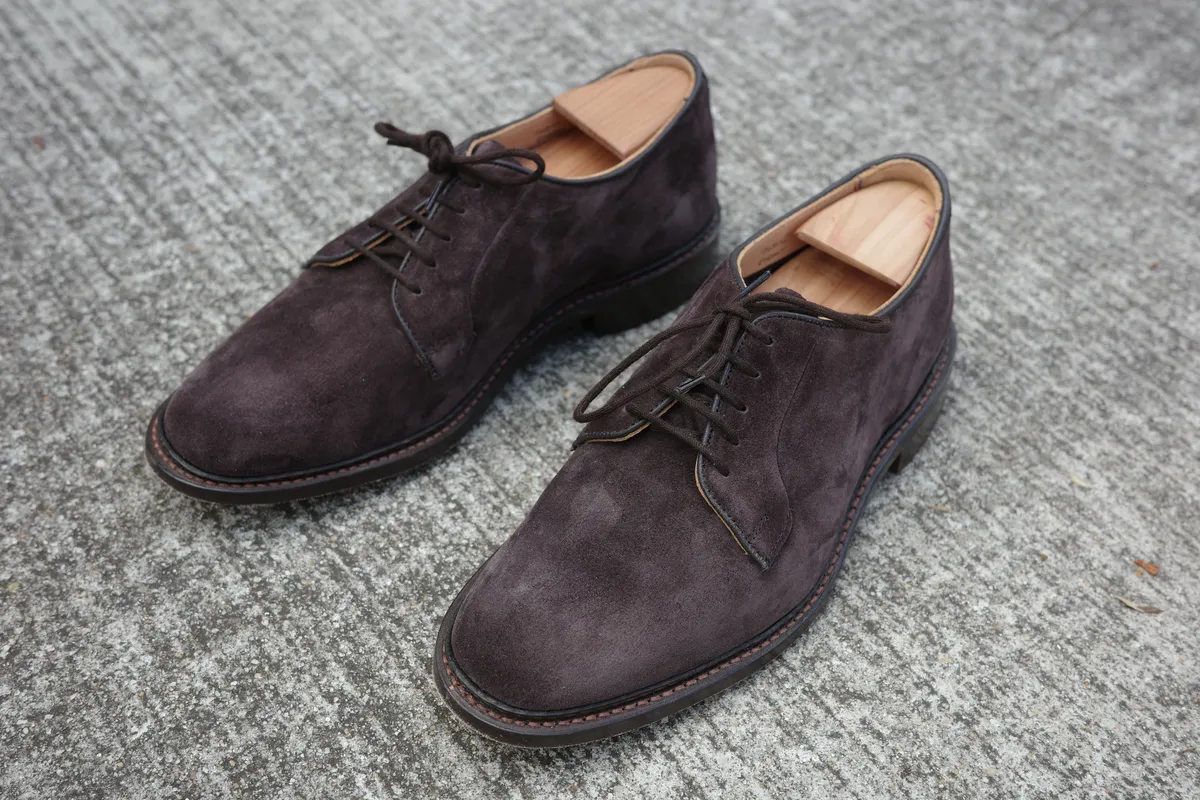
Suede's character is its nap, thousands of fine raised fibers that catch light evenly when they stand uniformly. Water wets the fibers, and as a spot dries the fibers in that patch lie down in a different direction and density from the surrounding nap. The mark you see is mostly that texture difference rather than dirt, which is why a water spot can look like a stain while the surface is actually clean.
That is why the safe order is dry methods first. An eraser lifts surface marks and a brush raises and evens the nap, which reverses what the water did, without wetting the suede again. Liquid cleaner is the second resort for stains that are genuinely in the material, used sparingly and across a whole panel so it dries evenly. Soaking a single spot with water or cleaner recreates the original problem in a larger shape.
The fix, in order
In order, cheapest first. Stop at the step that solves it. The product step is the last resort, not the starting point.
Free step
Let the shoes dry completely, stuffed with paper
Never work on wet suede. Stuff the shoes with plain paper to hold their shape and let them dry at room temperature, away from heat. Heat sets marks and warps the shape. Judge the damage only when fully dry, because wet suede always looks worse than the lasting mark.
Free step
Erase marks and brush the nap even
Rub water spots and light stains with a suede eraser using light strokes, then brush the whole panel with a suede brush to raise the nap evenly. Work the full panel, not just the spot, so texture and light reflection match across the shoe when you finish.
The product step
Use Saphir Omni'Nettoyant only where dry work falls short
For stains that remain, apply the Saphir cleaner sparingly as directed, treating the whole panel rather than dabbing the spot, and let it dry fully before brushing the nap back up. Even application and even drying are what prevent a cleaned panel becoming a new larger mark.
The product for this step
Saphir Omni'Nettoyant
Habit step
Protect the restored nap
Once the shoes are clean and the nap is even, apply a suede protector from the Saphir Renovateur class as directed and let it cure before wear. Protector helps the nap shed light rain, which is how most water spots arrive, and re brush after wear to keep nap uniform.
The evidence, in tiers
Tier 1 · The method
The eraser, brush, then protector sequence is the documented care protocol from suede specialists: dry nap restoration first, liquid cleaning as a controlled second step, and protection afterwards. The protocol's logic follows the nap mechanism described above.
Tier 2 · This product
Saphir is the heritage specialist house in suede care, and its suede line is the standard recommendation in specialist retail. Individual product star counts were not confirmed for this guide, so no precise rating is printed here (November 2026).
We have not water marked a test pair for this guide. The sequence follows the specialist protocol and the product line's own directions.
Tier 3 · What owners report
Owners report water spots lifting with eraser and brush alone more often than expected, and cleaner succeeding on older stains when applied to whole panels. The failure pattern in reports is consistent too: spot dabbing with water or cleaner, which leaves a bigger mark than the original.
The alternatives, conceded where they win
| Option | What it is | The honest verdict |
|---|---|---|
| Saphir suede care line | Eraser, brush, cleaner, and protector as one system | The pick: the staged protocol from the specialist house, with the cleaner held back until dry methods have had their chance. |
| Suede eraser and brush alone | Dry nap restoration with no cleaner | Wins on fresh water spots, which often need nothing more, and on price; it loses on set stains and grease-adjacent marks that are in the material, where dry work only evens the nap around the stain. |
| Water and a cloth at home | Wetting the mark to even it out | Wins on nothing but availability; it is the most common first move and the one that enlarges marks, because uncontrolled wetting and drying is the mechanism that created the spot in the first place. |
The honest price comparison
The honest comparison is a specialist suede cleaning service, which follows this same staged protocol at a per pair price, or writing off a marked pair that dry work might have saved. The eraser and brush stage alone costs very little.
Where it falls short
Below are the weaknesses from the product's own record: where buyers say it falls short, in their numbers.
- The cleaner stage demands restraint and even application; used eagerly on a single spot it can create the very marking it is meant to remove.
- Results on grease and oil stains are limited, because those are a different problem from water marking and may need specialist treatment regardless.
- The line is premium priced specialty care, and owners of inexpensive suede may find a full kit hard to justify for one pair.
The product, in short
Saphir Omni'Nettoyant
Questions people ask next
Can I just wet the whole shoe to even out a water spot?
Even wetting is the logic behind treating whole panels with cleaner, but plain water soaking is uncontrolled: it can shift dyes, stiffen the nap, and warp shape as it dries. The staged protocol exists to get even results without that gamble.
Why did brushing alone fix most of my mark?
Because most of a water spot is nap lying in the wrong direction, not dirt. An eraser lifts the surface mark and a brush stands the fibers uniformly again, so the light catches evenly and the visible spot largely disappears.
How do I keep water spots from happening?
Protector applied to clean, dry suede helps the nap shed light rain, and brushing after wear keeps the nap even so small marks do not build. Let wet shoes dry slowly with paper stuffing before brushing, never with heat.
Is the cleaner safe on colored suede?
Test it in a hidden area and let it dry before deciding, because dyes vary widely and some colored suedes shift under any liquid. Treat whole panels rather than spots, and take bleeding or very pale suede to a specialist instead.
Saphir suede care guidance from specialist retail (November 2026) · Specialist suede care protocol: eraser, brush, protector sequence (November 2026)
The Fix JournalCase 16Car & Fabric