Coffee Maker and Kettle Scale: Descaling With Citric Acid
Branded descaler is mostly citric acid, at ten times the price of citric acid itself. How much to use for each appliance, and the one machine where you should not use your own mix, are what this page covers.
The short answer
Skip the branded bottle. Descale with food-grade citric acid: about 2 tablespoons per quart of water for a kettle, run through, then a plain-water rinse cycle. A 2 lb bag costs about $10 and holds a year of descaling for every machine in the kitchen.
Why does this happen?
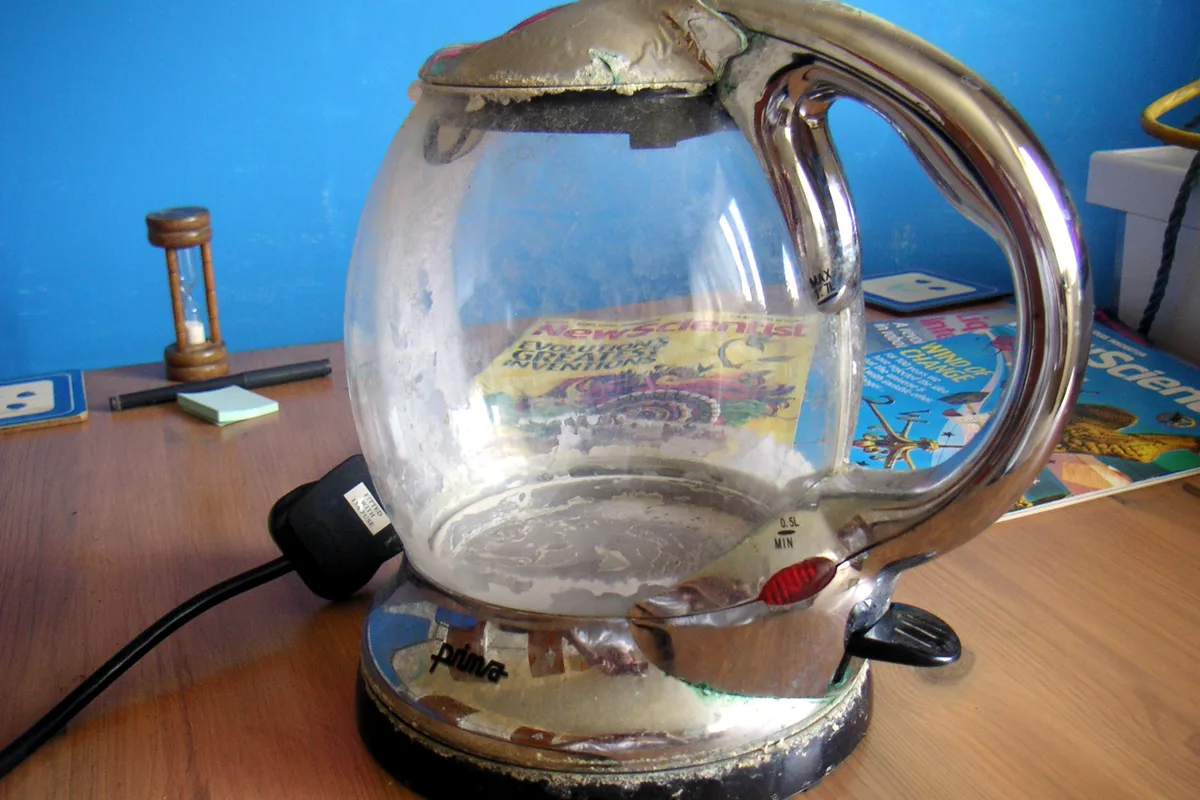
Scale is calcium carbonate precipitating out of heated water and plating the hottest surfaces: kettle elements, coffee maker boilers, espresso thermoblocks. A scaled kettle boils more slowly and sheds flakes. A scaled drip machine runs cool and slow, which ruins how the coffee brews, and is one cause of the bitter coffee covered in this site's coffee guide. Acids dissolve carbonate on contact, fizzing as they do, and citric acid is the food-safe acid that appliance makers themselves formulate into their branded descalers.
The reason to buy the plain powder instead: a branded descaler bottle is a few doses of this same acid, diluted and packaged, at roughly ten times the price per dose. What you need to know is how much to use, and it is simple: kettles and drip machines take a strong solution and a rinse; espresso machines take a milder one and you have to be careful with the seals, which is the one caution below.
The fix, in order
The steps are ordered cheapest first. Stop at the one that solves it and skip the rest; the product is there only for where the free steps run out.
The product step
Kettle: dissolve and boil
Fill with water, add about 2 tablespoons of citric acid per quart, bring to a boil, and let it stand 20 to 30 minutes. Heavy scale may need a second round. Rinse twice, until the water tastes plain, with no trace of the acid.
The product for this step
Food-grade citric acid (bulk powder)
The product step
Drip coffee maker: brew a blank
Same solution in the reservoir, run half the cycle, switch off and let it sit an hour, then finish the cycle. Follow with two full cycles of plain water. A machine that had slowed noticeably usually runs visibly faster.
Free step
Wipe the reachable scale
Shower screens, kettle lids, and the warming plate take a paste of citric acid and water on a cloth. The paste is for surfaces a soak cannot reach.
Habit step
Put it on the calendar by water, not by memory
Hard water: every 4 to 6 weeks. Soft water: every three months is plenty. Scale builds up on a schedule. Households that descale regularly never reach the thick, flaking stage.
The evidence, in tiers
Tier 1 · The method
Citric acid dissolving calcium carbonate is basic chemistry that anyone can check, and citric acid is the named active ingredient in major branded descalers.
Tier 2 · This product
Citric acid is a commodity, so its evidence is not a star rating: it is the ingredient list of the branded products and its bulk sale through canning and homebrew channels for exactly this use.
This is one guide where you can check the claim in your own kitchen within an hour: the fizz and the flaked scale in the rinse water are the test, and you can check it yourself rather than taking our word for it.
Tier 3 · What owners report
Homebrew and canning communities use the same powder at the same doses for the same mineral. That record, from other uses of the same powder, counts for more than a listing's stars.
The alternatives, conceded where they win
| Option | What it is | The honest verdict |
|---|---|---|
| Bulk citric acid | The chemistry itself, dosed by you | Our pick: it works in exactly the same way as branded descaler, at roughly a tenth of the cost per dose. |
| Branded descaler bottles | Pre-dosed citric (or similar) acid solutions | Best for convenience, and for espresso machines where the maker requires its own product. It loses badly on price for kettles and drip machines. |
| White vinegar | Acetic acid solution | Wins on pantry availability and works; it loses on the lingering taste and smell that take extra rinse cycles to clear from coffee equipment, and some makers warn against it for seals. |
The honest price comparison
The honest comparison is one branded bottle: $10 to $15 for two or three doses, against a $10 bag holding forty or more. The saving across a year of descaling is the entire price of the bag, several times over.
Where it falls short
The weaknesses below come from the product's own review record, the same record the recommendation rests on.
- It is a powder you dose yourself; readers who want zero thought will still prefer the bottle, and that convenience is genuinely worth something.
- It does not fix a machine whose problem is a failing pump or thermostat; scale is the common cause of slowness, not the only one.
- Super-automatic espresso machines cannot be descaled at home, because of how they are built. This page covers machines where the water passages can be reached.
The product, in short
Food-grade citric acid (bulk powder)
Questions people ask next
How do I know my machine needs descaling?
Slower cycles, lower brewing temperature (coffee tastes sour or weak from the same beans), flakes in the kettle, and a visible white crust at the waterline. Any one of them means it is time to descale.
Is citric acid safe to drink afterward?
It is a food ingredient (it is what makes citrus fruit sour), and the rinse cycles clear it anyway. Always run two plain-water cycles after descaling.
Can I descale a single-serve pod machine the same way?
Yes, with the same solution run through on the largest cup setting without a pod, and the same rinse cycles. The reservoir path is all the chemistry needs.
Why does my kettle scale faster than my neighbor's?
Water hardness varies by street and by source. How fast your kettle scales up tells you how hard your water is: fast scale means hard water, and several other guides on this site (glasses, toilet rings) probably describe your house too.
Calcium carbonate dissolution chemistry; citric acid as the active ingredient in branded descalers · Canning and homebrew practice for food-grade citric acid dosing
The Fix JournalCase 14Home Surfaces