Sour Smell in Laundry Even After Washing
Clothes that smell clean when wet and sour when dry are carrying bacteria that regular detergent never killed. Detergent cleans dirt. It does not kill bacteria, and that difference is what this page is about.
The short answer
The smell is bacteria living in the fabric, and washing alone does not remove it. Add Lysol Laundry Sanitizer to the rinse cycle (the softener dispenser, never mixed with detergent) to kill the bacteria producing the sour smell. It holds 4.8 stars from 33,175 ratings on Amazon (November 2026).
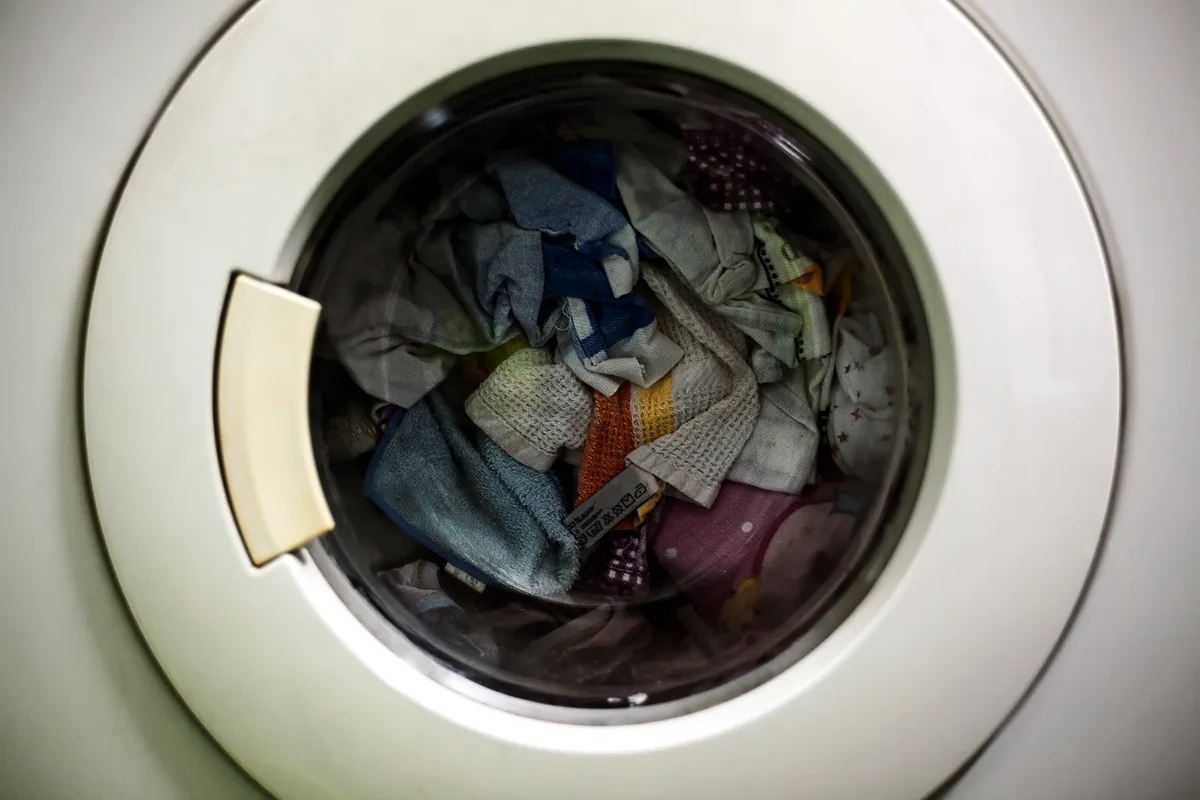
Why does this happen?
Sweat itself is nearly odorless. The sour and stale smell is the waste of bacteria that live in fabric, feed on sweat and skin oils, and survive ordinary washes because detergent is built to lift dirt, not to kill bacteria, and cool water does the bacteria no harm at all. Synthetics make it worse: polyester fibers hold oils, and the bacteria form a film that gives off odor every time the garment warms up on your body.
That is why the pattern is so consistent: fine out of the machine, sour by midday. The bacteria were never removed, only covered with scent, and body heat brings them back to life. Killing them in the rinse, where a sanitizer touches the fabric at full strength, is the step the wash cycle is missing.
The fix, in order
The steps are ordered cheapest first. Stop at the one that solves it and skip the rest; the product is there only for where the free steps run out.
Free step
Rewash the worst load hot with a long soak
Use hot water, a 30-minute soak pause if your machine allows it, and a full dose of detergent. This clears loose dirt and bacteria and tells you how deep the problem is. If the smell survives, the bacteria are well established in the fabric.
The product step
Sanitize in the rinse cycle
Add Lysol Laundry Sanitizer to the fabric softener dispenser or a rinse-cycle ball so it is released in the rinse, using the dose on the label, and let it soak for the full contact time on the label before the rinse drains. The time in contact with the fabric is what does the work. A quick pass does less.
The product for this step
Lysol Laundry Sanitizer (Sport or Original)
Habit step
Dry completely, every time
Bacteria regrow in damp folds left in a hamper. Dry loads fully and move them out of the machine promptly. A sour hamper can pass the smell to clean clothes.
Habit step
Keep a sanitizer pass in the rotation
Using it every few washes on the loads most prone to bacteria (gym clothes, towels, workwear) keeps the bacteria from building up again, so the deep rescue stays rare.
The evidence, in tiers
Tier 1 · The method
The product's own label carries the sanitizer claim and its required contact time. EPA-registered laundry sanitizers are tested against named bacteria on fabric. The method here is the label, followed as written.
Tier 2 · This product
Lysol Laundry Sanitizer holds 4.8 stars from 33,175 ratings on Amazon (November 2026).
We have not run a controlled smell test for this guide. How it works is the product's own registered label claim, and its record is quoted above.
Tier 3 · What owners report
Owners of gym clothes report the difference shows on the second wear, not the first: the garment stays neutral when warm instead of turning sour. A minority dislike the scent and use the free-and-clear version.
The alternatives, conceded where they win
| Option | What it is | The honest verdict |
|---|---|---|
| Lysol Laundry Sanitizer | Kills bacteria in the rinse, left in contact for the time on the label | The pick: the only product in the laundry aisle that deals with the cause rather than the smell. |
| Scent boosters and extra detergent | Perfume and more surfactant | Best for the first hour out of the dryer. By midday it loses, because the bacteria are untouched. More detergent can feed the film they form. |
| Vinegar in the rinse | Mild acid rinse | Best on price for light, occasional odor, and it helps rinse residue out. It is not a sanitizer, and it does not work on bacteria established in synthetics. |
The honest price comparison
Compare it with replacing the clothes: a set of workout gear runs $100 and up, and people throw away sour-smelling synthetics that are otherwise in perfect condition. A $12 to $15 bottle treats dozens of loads.
Where it falls short
The weaknesses below come from the product's own review record, the same record the recommendation rests on.
- It is a scent-forward product in its main variants; the scent is part of the design and not everyone wants it.
- It needs its label contact time in the rinse; machines with very short rinse cycles deliver less than the label assumes.
- It does not fix a washing machine with bacteria growing in it, and using it forever to make up for one is the expensive path.
The product, in short
Lysol Laundry Sanitizer (Sport or Original)
Questions people ask next
Why does the smell come back when I wear the clothes?
Body heat and sweat bring the surviving bacteria in the fabric back to life. The wash covered them with scent. It never killed them. That pattern is the sign of bacteria living in the fabric rather than a dirty garment.
Can I use it on colors and delicates?
Per its label it is safe for colors and for most fabrics including synthetics and blends, used in the rinse. Follow the label for delicates and wash a first small load if you are unsure.
Does hot water alone sanitize laundry?
Truly hot water (60 C and above, held at that heat) kills bacteria, but most home machines and most garments never see that combination. The sanitizer exists for the wash people actually run: warm or cool water, normal cycle.
Is the Sport version different?
The Sport version is marketed for synthetic athletic fabric and heavy odor loads. It works the same basic way as the original. Either one works for the steps in this guide.
EPA-registered label claims for Lysol Laundry Sanitizer · Amazon product record for Lysol Laundry Sanitizer (November 2026)
The Fix JournalCase 05Home Surfaces