The Bike Tire Keeps Going Flat
Third flat this month on the same bike, and no clear reason: the cause is written in the old tube, and the fix starts with reading it
The short answer
Repeat flats have causes, and the old tube names yours. A hole on the tread side is a puncture. Two small holes side by side are a pinch, from hitting something with too little air. A hole on the rim side points at the rim tape or a spoke end. Read the tube before you spend anything. Where the cause is small punctures, thorns, glass, and tacks through the tread, sealant inside the tube plugs them as they happen. Slime tube sealant seals tread punctures up to an eighth of an inch, and it holds 4.3 stars from 23 reviews at REI (November 2026). That count is small, and this page prints it as small; the fuller record for this sealant sits with the pre-filled tubes made with it, covered below. Sealant does not fix pinch flats, sidewall cuts, or a tire worn down to the threads. Those need air, a new tire, or both.
Why does this happen?
Most repeat flats are the same flat twice. A shard of glass or a thorn stays in the tire when the tube is changed, and it punctures the new tube at the same spot. The second mistake is fitting a new tube without finding the first cause: the hole pattern in the old tube, and a careful check of the tire and rim, are what stop the cycle.
A sealant works before the flat, not after it. The liquid coats the inside of the tube, and when something pierces the tread, the escaping air carries the sealant into the hole, where its fibres and particles jam and set. Holes in the tread, in the middle of the contact patch, are the ones it reaches. Holes in the sidewall flex too much to hold a plug, and a pinch flat is two slits, not a round hole.
Sealant has a working life. Inside a tube it stays active for about two years, then dries and stops sealing, which owners discover at the next puncture. It also adds weight and can clog a valve over time. Those are the terms of the trade: fewer stops at the roadside for the puncture-prone routes, in exchange for a tube you replace on a schedule instead of by surprise.
The fix, in order
Cheapest first, in order. When a step solves it, you are done; the product step is for the cases the free steps cannot finish.
Free step
Read the old tube and clear the tire
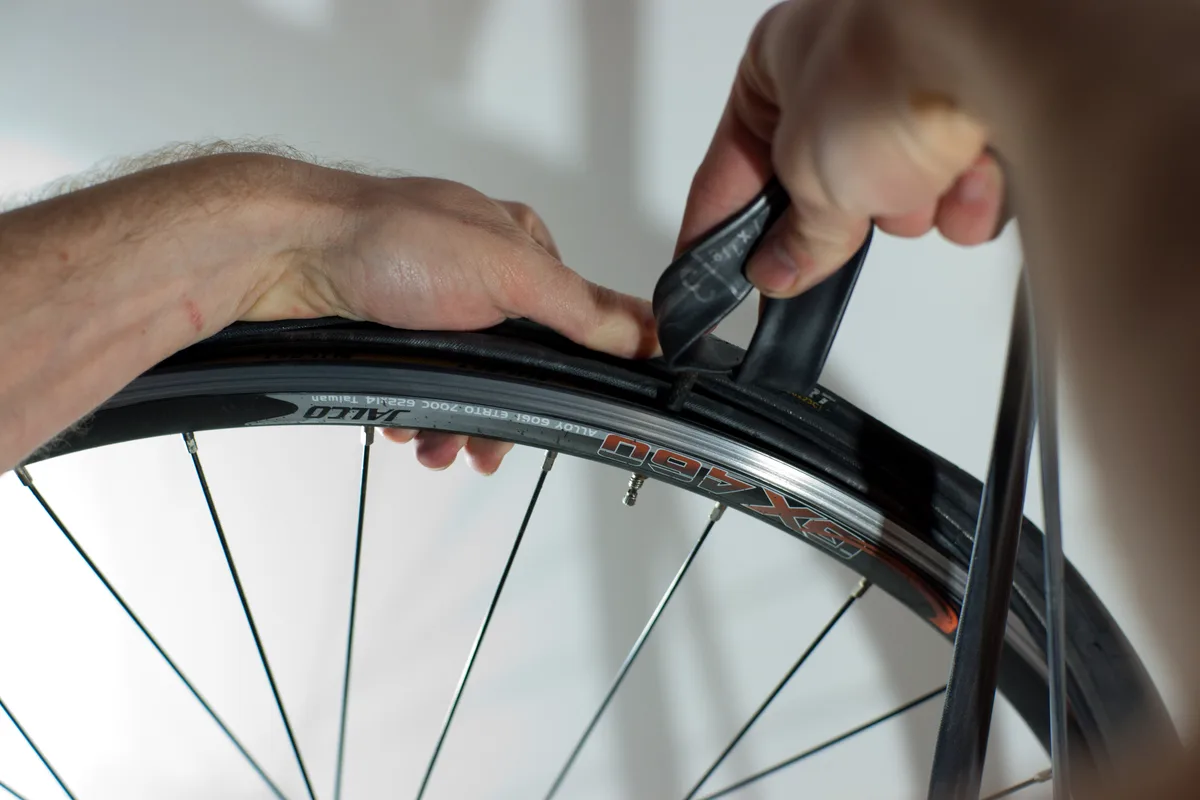
Inflate the old tube until the leak shows, and match the hole's position to the tire and rim. Pick or brush out any glass or thorn still in the tread. Replace rim tape that has shifted. Most repeat flats end at this free step, because the cause comes out with the shard that caused it.
The product step
Fill the new tube with Slime
Fit a new tube, and add the maker's measure of sealant through the valve with the core removed, using the cap tool in the bottle top. Spin the wheel to coat the inside, then inflate to the pressure printed on the tire's sidewall, and keep it there. Under-inflation is what turns a bump into a pinch flat, sealant or not.
The product for this step
Slime tube sealant, 8 ounce bottle
Habit step
Note the date and check pressure weekly
Write the fill date on a sticker on the bottle or the frame. Top up pressure weekly; a soft tire pinches, and no sealant seals a pinch. Plan to replace the tube and sealant at about two years, before the sealant's working life runs out mid-ride.
The evidence, in tiers
Tier 1 · The method
The method follows flat diagnosis practice in bike shops: locate the hole, match it to its cause, clear the tire, then prevent. The maker's figures govern the sealant's claims: it seals tread punctures up to an eighth of an inch in a tube and stays active for two years. Pressure discipline is part of the method, because the pinch flat, the commonest repeat flat of all, is an air problem, not a puncture problem.
Tier 2 · This product
Slime tube sealant holds 4.3 stars from 23 reviews at REI (November 2026), a small record, printed as small, with 12 of 16 reviewers there saying they would recommend it. At BikeTiresDirect, a specialist bike retailer, owner reports for the same bottle describe multi-year flat prevention and name the two year limit from their own use. The fuller record for this sealant is the pre-filled tube made with it: 104 reviews at BikeTiresDirect averaging about 4.4 stars, from commuters reporting years without a puncture. We have not filled a tube for this guide.
This page weighs the evidence in the open: a small first-hand record for the bottle, a much larger one for the same sealant in its pre-filled tube, and hands-on long-term testing read for this guide in which the sealant closed punctures across 1,800 test miles. The bottle's own figure is the one printed in the verdict, with its count, because it is the product being named.
Tier 3 · What owners report
Owners in thorn country describe pulling thorns out of tires with no loss of air, and commuters describe flat-free years on treated tubes. The complaints repeat three points: sealant past its two year life that no longer seals, valves that clog and need clearing, and the extra weight and slight imbalance a filled tube carries, which racers notice and commuters mostly do not.
The alternatives, conceded where they win
| Option | What it is | The honest verdict |
|---|---|---|
| Slime tube sealant, 8 ounce bottle | Liquid sealant you add to your own tubes through the valve | The pick for the tread puncture case: you choose the tube, the dose is measured per wheel, and one bottle covers a bike with some left for the next fill. |
| Slime self-sealing tubes | Tubes with the same sealant already inside, bought ready to fit | The no-mess row, and the shelf's larger record: 104 reviews at BikeTiresDirect at about 4.4 stars, heavy with commuter reports. Dearer per wheel than filling your own, and the pick if the valve work puts you off. |
| Tire liners (Mr Tuffy class) | A tough strip that sits between tire and tube and blocks punctures physically | A real alternative with no liquid and no two year clock, and it does nothing for a pinch flat either. Its own record was not read first hand for this guide, so it is named by fit, without a score. |
| The free triage: read the tube, clear the tire, check the pressure | Diagnosis and air, no product | The step that ends most repeat flats, recorded here as the method rather than an option. If your holes are pinches or rim side damage, this row is the whole answer and the sealant rows are a waste of money. |
The honest price comparison
Spend in order. The triage is free and ends the cycle when the cause is a shard, a spoke, or soft tires. The bottle is the spend when the cause is thorn and glass country on your regular routes. The pre-filled tubes cost more per wheel and save the filling job. A liner suits a rider who will not have liquid in a tube at any price.
Where it falls short
What follows is drawn from the product's own reviews: the complaints and failures buyers report after living with it.
- It cannot seal what it cannot reach. Sidewall cuts, pinch flats, and holes bigger than an eighth of an inch all defeat it, and those are most of the flats that are not tread punctures.
- It expires in the tube. At about two years the sealant dries out and stops sealing, usually discovered at the worst moment. The fill date habit in the ladder is part of the product, not an extra.
- It adds weight and can clog valves. A filled tube is heavier, can feel slightly out of balance at speed, and sometimes needs its valve core cleared or replaced when it gums up.
- A sealed puncture is still a damaged tube. Sealant gets you home and keeps the tire up, but a tube that has sealed several holes is living on borrowed time and belongs on the replacement list, not in the spares you trust far from home.
The product, in short
Slime tube sealant, 8 ounce bottle
Questions people ask next
Why do I keep getting flats in the same place?
Something is still in the tire, or the rim tape has moved and a spoke end is doing it. Match the hole in the old tube to the spot on the tire and rim before fitting a new tube. A flat that repeats at one position is a message, and the position is the message.
Does sealant work in a tubeless tire?
This page is about tubes. Tubeless setups use their own sealants, added through the valve or poured in before the tire seats, and the same two year life and tread-only limits apply in spirit. Do not mix the two systems' products without checking the maker's guidance.
How much goes in one wheel?
Follow the measure printed on the bottle for a bike tube; the bottle's cap carries a fill guide. More is not better: excess sealant adds weight and imbalance without sealing any better.
Can I patch a tube that has sealant in it?
Patching a slime filled tube is unreliable, because the sealant works against the patch glue. Owners in the record say the same. Carry a plain spare tube on longer rides, and treat a sealed tube as one to replace at home rather than repair.
REI listing record for Slime tire sealant (November 2026) · BikeTiresDirect records for Slime tube sealant and Slime self-sealing tubes (November 2026) · Slime maker specifications: puncture size limit and two year working life
The Fix JournalCase 47Home Systems