Pantry Moths in the Flour and Grains
Pantry moths arrive as eggs in the products themselves, and the adults fluttering in the kitchen are the last stage, not the infestation. The purge finds the source, and pheromone traps catch the males and tell you whether you won.
The short answer
Empty the pantry's dry goods and hunt the webbing: the source is usually one infested bag. Then hang Dr. Killigan's pheromone traps to catch the males and prove the purge worked. The traps hold 4.74 stars on the brand's own store, with a review corpus around 37,748 reported across its listings (November 2026). If you still catch adults in a trap next week, a source survived somewhere. An empty trap for a month means the infestation is over.
Why does this happen?
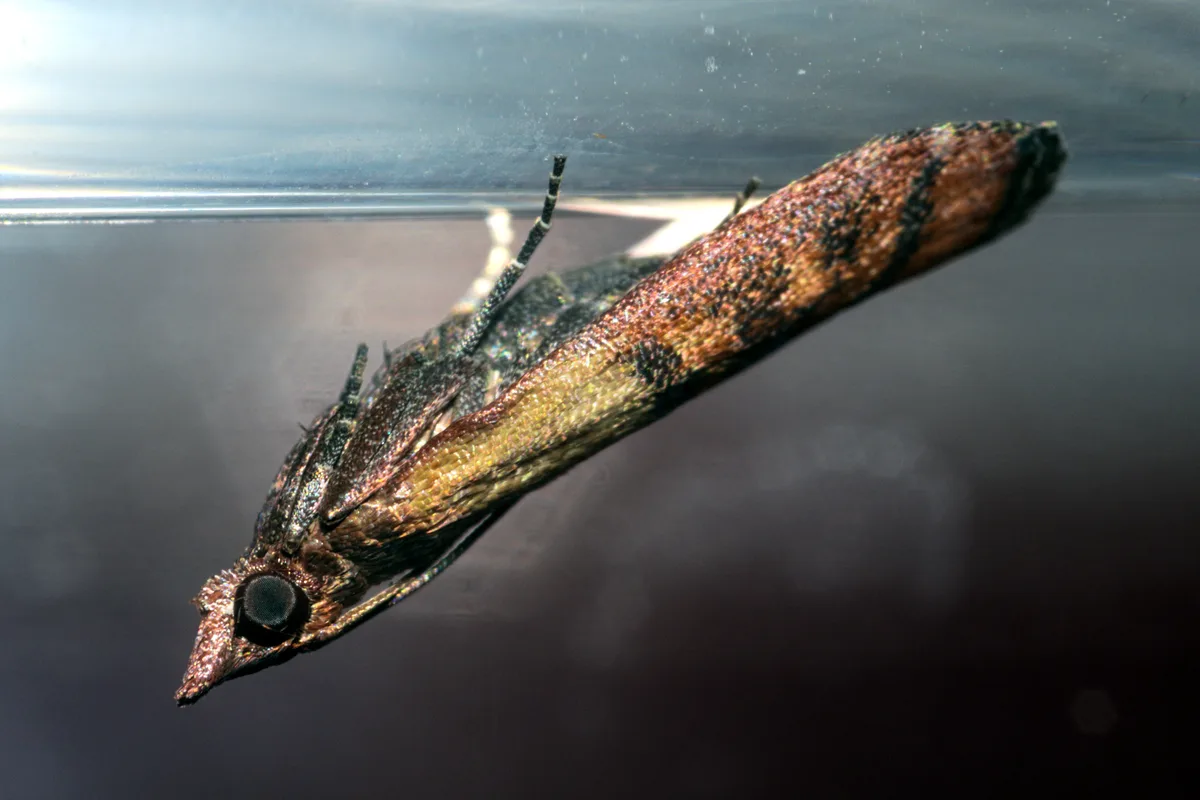
Indian meal moths, the usual pantry species, enter homes as eggs or larvae inside packaged grains, flour, nuts, pet food, and birdseed, bought in good faith from a store with its own quiet problem. Larvae feed inside the product, then wander to pupate in cabinet corners, jar threads, and the folds of packaging, which is why the infestation outlives the bag it rode in on. Adults live about a week and do not eat; they mate and lay the next generation in the nearest dry goods. The moths you see flying are the end of a chain that began invisibly inside a package weeks earlier.
Control matches the cycle. The purge removes the larval food (every package inspected for webbing, clumping, and larvae, with suspects discarded outdoors and keepers frozen for several days to kill any stage), and pheromone traps remove males before mating while acting as the measurement system: a trap's catch count over weeks is the infestation's vital sign. Sprays are nearly useless here, and this page does not recommend them: they cannot reach inside packages, and residues have no business around food.
The fix, in order
Cheapest first, in order. When a step solves it, you are done; the product step is for the cases the free steps cannot finish.
Free step
The purge: inspect every package, ruthlessly
Empty the cabinets completely. Hold each bag and box to the light. Webbing, silk threads, clumped flour, or larvae send it to the outside bin. Do not open it to argue about it. Wipe shelves, vacuum corners and shelf-pin holes (pupation sites), and wash with soapy water.
Free step
Freeze or seal what survives
Keepers go into a freezer for four days to kill eggs and larvae invisibly present, then into glass or hard plastic with tight lids. The cardboard box is not storage; it is habitat with a label.
The product step
Hang the pheromone traps as breakers and monitors
One Dr. Killigan's trap inside the pantry area (not inside food containers), replaced per its label life. Several traps in one small pantry compete with each other, which can make the catch count hard to read.
The product for this step
Dr. Killigan's Premium Pantry Moth Traps
Habit step
Read the traps weekly for six weeks
Declining catches to zero over a month: won, and traps can retire to a single sentinel. Persistent catches: a source remains (work the pet food, the spice rack's forgotten jar, the birdseed in the garage), and the traps just told you where to look next.
The evidence, in tiers
Tier 1 · The method
Pheromone trapping for monitoring and mating disruption of stored-product moths is standard IPM in food facilities as well as homes; the four-day freeze to kill all life stages is extension-published guidance.
Tier 2 · This product
Dr. Killigan's traps hold 4.74 stars on the brand's own store, with a total review corpus around 37,748 reported across its product listings (November 2026). Brand-store ratings run warm and are identified as such; the corpus size is the meaningful figure.
We have not purged a test pantry for this guide. The method is the food industry's own IPM sequence scaled to a kitchen.
Tier 3 · What owners report
Owners report the traps' monitoring value as the real purchase: the visible count falling week by week ends the uncertainty that makes pantry moths feel endless, and the failures trace to un-audited side storage (pet food, birdseed) that the triage now names.
The alternatives, conceded where they win
| Option | What it is | The honest verdict |
|---|---|---|
| Dr. Killigan's pheromone traps plus the purge | Male capture and monitoring after source removal | The pick: the purge does the killing; The traps stop the breeding and show whether the purge worked. Sprays do neither of those two jobs. |
| Pantry sprays and foggers | Contact insecticide in a food space | Loses on reach (nothing touches eggs inside packages), on food safety sense, and on evidence. The rare product class where this page's advice is simply: do not. |
| Bay leaves and folk deterrents in the flour | Traditional repellents | Wins on charm and costs pennies; it loses on evidence, because eggs already in the product are not deterred, they are home. Freeze and seal beats folklore at its own price. |
The honest price comparison
The honest comparison is the pantry itself: a full restock after a bad infestation runs $100 and up in discarded goods, plus the weeks of moths. A $12 to $15 pack of traps that monitors the purge protects that restock and every one after it.
Where it falls short
What follows is drawn from the product's own reviews: the complaints and failures buyers report after living with it.
- The traps catch males only: they cannot rescue an un-purged pantry, and a trap hung over infested flour is a spectator, not a solution.
- The brand-store rating (4.74 stars) is warmer than an independent marketplace record would likely be; the corpus size and the method carry the recommendation.
- Lures fade on their label schedule; a stale trap showing zero catch proves nothing, so the monitor's own freshness is part of the discipline.
The product, in short
Dr. Killigan's Premium Pantry Moth Traps
Questions people ask next
Are the moths harmful if some got into food we ate?
Stored-product moths are a quality and disgust problem, not a poisoning one; health guidance treats accidental ingestion as harmless. Discard infested goods for sanity and quality, not from danger, and let that calm the purge rather than panic it.
How long does the whole thing take?
The purge is an afternoon. Monitoring runs six weeks because eggs and pupae already placed finish their cycle over that window; a clean trap record across it is the definition of done.
Can I save an opened bag that looks fine?
Freeze it four days and move it to glass with a tight lid. 'Looks fine' plus freezing equals saved; 'looks fine' back into cardboard equals the sequel.
Where do people usually miss the source?
Pet food first, birdseed second, the decorative dried-corn wreath third, and the back-corner spice or tea nobody opens fourth. The traps' persistent catch is the map; audit outward from the pantry in that order.
Extension and food-industry IPM guidance on stored-product moths · Brand store record for Dr. Killigan's Pantry Moth Traps (November 2026)
The Fix JournalCase 17Home Systems