My Cat Won't Drink Water (Except From the Faucet)
A cat that begs at the faucet is telling you it prefers moving, fresh water to a still bowl that has sat out. A drinking fountain gives the cat the same appeal as the tap, at floor level, as long as it is placed well and kept clean enough that the water stays inviting.
The short answer
If your cat drinks eagerly from the tap and ignores its bowl, offer moving water where the cat lives. Set up a Catit Flower Fountain away from the food dish and keep its filter on schedule. It holds 4.1 stars from 3,600 ratings on Chewy (November 2026), a large record with real weaknesses this page does not hide. This fixes a preference, and it is presented as that. No fountain is sold here with health promises, because preference and placement are what the evidence supports.
Why does this happen?
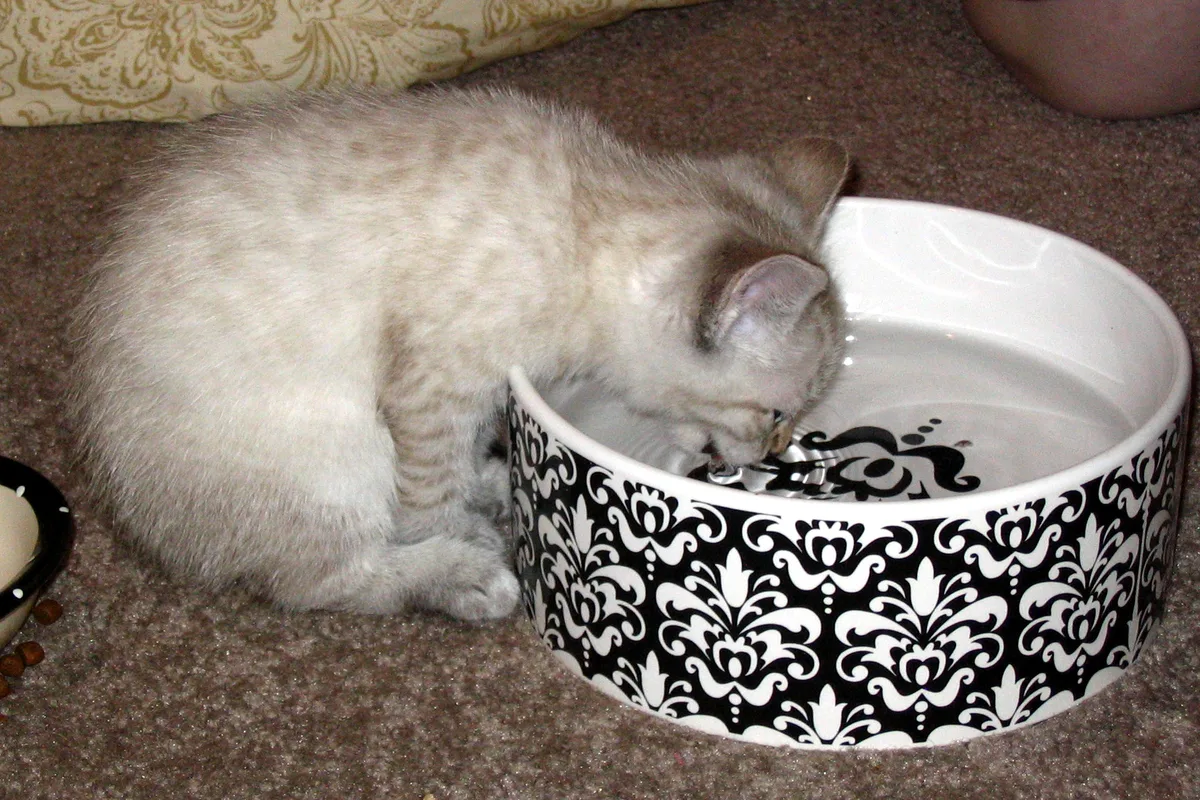
Cats are more suspicious of water than dogs are. In the wild, still water near a kill is suspect and running water is fresher. The home version of that instinct is a cat that ignores a bowl filled this morning and drinks happily from a dripping tap. Whiskers add a second factor. A deep, narrow bowl presses on sensitive whiskers as the cat drinks, and some cats drink less from a dish that annoys them. A bowl beside the food can also pick up food smell and crumbs, making the water less appealing to the cat.
A fountain answers that preference directly. Moving water is visible and audible, it stays fresh, and the cat can drink from a stream or a shallow surface without pushing its face into a bowl. Placement does the rest. A fountain beside the litter box or in a noisy corner will be underused, while one in the cat's ordinary living space, near the room where it already seeks the tap, becomes part of the routine. The filter keeps the recirculating water tasting clean between refills, which is why neglecting the filter undoes the whole purchase.
The fix, in order
The steps run in order, cheapest first. Stop at the step that works. The product comes last, and only where the free steps run out.
Free step
Refresh and relocate the bowl first
For a few days, offer fresh water in a wide, shallow bowl placed away from the food dish, refreshed twice daily. Some cats drink enough once whisker contact and food smell are removed, and this costs nothing. Note whether the cat really drinks more. If the cat still waits at the faucet, you have your answer about preference.
The product step
Set up the Catit Flower Fountain where the cat lives
Assemble the Catit Flower Fountain, rinse the filter as directed, and place the fountain in the room the cat favors, on a mat, within reach of an outlet but away from the litter area. Let the cat investigate it switched on without pressure. Most cats drink from the streams or the surface within a day or two once curiosity replaces suspicion.
The product for this step
Catit Flower Fountain
Free step
Keep the water worth drinking
Top up the fountain before it runs low, because a low pump is noisy and a noisy fountain puts cats off, and change the filter on the maker's schedule. Wash the fountain parts weekly. A fountain allowed to go stale teaches the cat that the tap was better all along. That is a maintenance failure, not a cat failure.
Habit step
Count the tap requests as your measure
Watch the behavior you were trying to change: if faucet begging fades and the cat drinks at the fountain through the day, the preference is met. Keep one plain bowl available as a backup so the cat is never dependent on a pump that might stop while you are away from home.
The evidence, in tiers
Tier 1 · The method
The evidence for the method is behavioral. Many cats clearly prefer moving water and drink more readily from it, and bowl placement and whisker comfort are documented factors in how much a cat drinks. This page makes no kidney or urinary health claims for fountains, because the research behind it supports preference, not treatment.
Tier 2 · This product
The Catit Flower Fountain holds 4.1 stars from 3,600 ratings on Chewy (November 2026). That is the weakest passing record among the cat products in this set, with durability and pump strength complaints recurring in that record.
We have not lived with this fountain and a cat for this guide. The placement and upkeep method follows the preference pattern and the maintenance complaints documented in the product record.
Tier 3 · What owners report
Owners report many faucet cats switching to a fountain within days, alongside the opposite pattern: pumps that weaken, parts that wear, and cats that lost interest when cleaning slipped. The satisfied reports come from owners who treat the fountain as a small appliance to maintain, not a bowl that maintains itself.
The alternatives, conceded where they win
| Option | What it is | The honest verdict |
|---|---|---|
| Catit Flower Fountain | Plastic recirculating fountain with flower streams, 3 L | Our pick for a first fountain: a very large record at an entry price, with its durability limits stated rather than hidden, and good enough to test whether your cat likes moving water. |
| Wide bowl, refreshed twice a day | Still water in a shallow, whisker friendly bowl | The cheapest and quietest choice, and it fixes the group of cats whose problem was stale water or an annoying bowl. It does not work for a true faucet cat, whose preference is movement itself, which no bowl, however fresh, can imitate. |
| Stainless steel fountain | Recirculating fountain in stainless steel, higher tier | Wins on hygiene and longevity: steel cleans more completely and the design covered in the slime focused page on this site holds a stronger record. It loses on entry price, which is a real consideration before you know whether your cat will use any fountain at all. |
The honest price comparison
Compare the costs in stages. A bowl costs nothing and should be tried first. This fountain is the entry-priced test of the moving water idea, and the stainless tier costs more for durability. Filters are the running cost to count, because a fountain kept on schedule is the version that works.
Where it falls short
The weaknesses below are taken from the product's own review record. They are printed here because the recommendation is.
- Its record is the weakest of the cat products in this set: durability and pump strength complaints recur, and some units fade within a couple of years.
- It is plastic, which scratches and holds residue more readily than steel, so its cleaning has to be more faithful, not less.
- The pump is audible when the water runs low, and sound sensitive cats may avoid a fountain that has become noisy.
- It commits you to replacement filters on a schedule; skip them and the water quality the cat was promised quietly disappears.
The product, in short
Catit Flower Fountain
Questions people ask next
Will a fountain make my cat drink more?
For a cat whose issue is preference, usually yes: owners consistently report faucet cats drinking readily at a fountain. It is not a health treatment and this page makes no such claim. A cat drinking notably more or less than usual, for any reason, should be checked by a veterinarian.
Where should the fountain go?
In the room the cat lives in, away from the litter box and ideally not tight against the food dish, on a mat to protect the floor. An outlet needs to be in reach. A fountain shut away in a utility room gets visited rarely.
How often do filters and cleaning happen?
Follow the maker's filter schedule and wash the parts weekly, including around the pump. Recirculated water stays inviting only if the system is kept clean; a neglected fountain can end up less appealing than the honest bowl it replaced.
My cat is still asking at the tap. Give up?
Not yet. Check the fountain is quiet, full, clean, and in the cat's territory, and give a cautious cat a week of living with it before judging. Some cats also keep a tap habit as a social routine with their person, even while drinking well at the fountain.
Chewy product record for Catit Flower Fountain (November 2026) · Catit Flower Fountain filter and care directions
The Fix JournalCase 23Pets