Aphids on Roses: Clusters on Every New Bud
Aphids gather on roses because new growth is soft and has no defence, and they multiply faster than almost anything else in the garden. A ready-to-use neem spray will deal with a real infestation. Spray only at dusk, and never on open blooms, so you do not harm the pollinators that also feed on the roses.
The short answer
Spray at dusk, soak the clusters, and keep the spray off the blooms. Bonide Captain Jack's Neem Oil, ready-to-use, kills rose aphids on contact and discourages the next wave. It holds 4.0 stars from 2,972 ratings at Home Depot (November 2026). How you use it matters as much as the spray itself: apply it in the evening when pollinators have gone home, do not spray open flowers, and repeat every week while aphids are active.
Why does this happen?
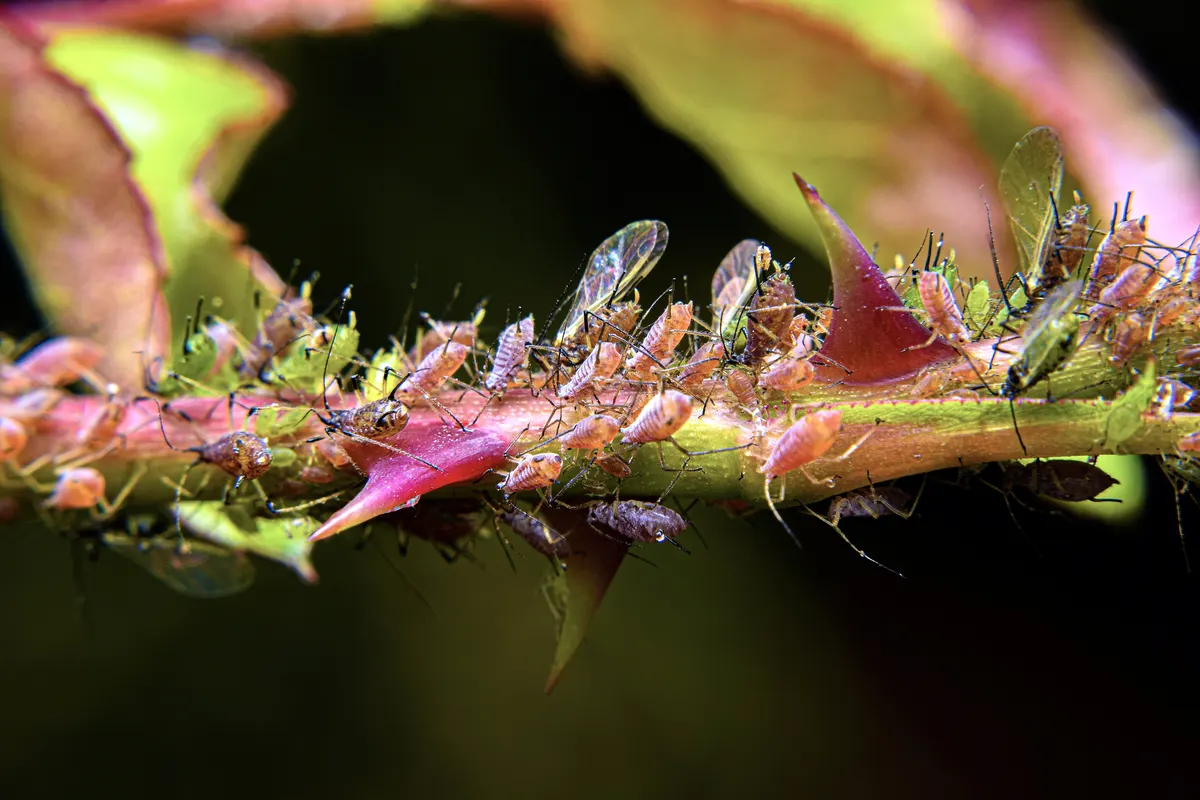
In spring, female aphids give live birth to daughters that are already pregnant, so a colony grows very fast while the weather is mild and the rose's new growth is soft and rich in nitrogen. They cluster on buds and shoot tips because that is where the sap is sweetest. Their feeding distorts buds. They also leave a sticky waste called honeydew, which grows sooty mold and attracts ants. The ants protect the aphids from predators in exchange for the sugar.
Neem's active compound is azadirachtin, and the oil itself smothers soft-bodied insects on contact. It works in several ways: it kills the aphids it touches, it puts survivors off feeding, and it disrupts their growth. Its limits are just as clear. It only works where it lands, so undersides and clusters must be wetted. It breaks down in sunlight within days, so you need to repeat it. And it can injure bees that touch wet spray. Spraying at dusk solves that, because bees feed by day and the spray dries overnight. Lady beetles, lacewings, and hoverflies will also come and eat aphids, as long as broad-spectrum insecticides have not killed them first. Neem helps here because it does not wipe those helpers out.
The fix, in order
Work down the list: free and cheap steps first. Stop when the plant turns the corner; the product is only for what the free steps cannot do.
Free step
Blast first, and count what remains
A sharp jet of water on the clusters, every other day for a few days, removes most aphids. If the clusters are back at the same density within 48 hours, the colony is reproducing faster than the hose can clear it, and that is the point where a spray is justified.
Free step
Stop the ants protecting the aphids
If ants are protecting the colony, put a sticky barrier on the canes or bait the ants, and the predators will be able to reach the aphids. Roses near ant nests will keep struggling until you deal with the ants.
The product step
Neem at dusk, thoroughly, off the blooms
Spray Captain Jack's Neem Oil in the evening, wetting the clusters and leaf undersides, avoiding open flowers entirely (spray buds and foliage, shield blooms with a hand if needed), on a watered plant in cool temperatures. Repeat at weekly intervals while new clusters form, typically two to three applications across the flush.
The product for this step
Bonide Captain Jack's Neem Oil (ready-to-use)
Habit step
Feed the predators' schedule
Leave a few aphids standing (a predator nursery) once numbers are tolerable, skip broad-spectrum sprays anywhere near the roses, and plant flat flowers (alyssum, dill) nearby: hoverflies and lacewings patrol gardens that feed their adults. The season's second flush often never needs the bottle.
The evidence, in tiers
Tier 1 · The method
Neem's azadirachtin action and pollinator timing guidance are documented by extension services and the EPA's biopesticide registration; the dusk and bloom rules are the standard pollinator-protection practice for garden insecticides generally.
Tier 2 · This product
Bonide Captain Jack's Neem Oil RTU holds 4.0 stars from 2,972 ratings at Home Depot (November 2026), a mid-pack record consistent with a product whose results depend on the application discipline this page spends its length teaching.
We have not sprayed test roses for this guide. The pollinator rules are stated as conditions, and the label governs where it and this page differ.
Tier 3 · What owners report
Owners succeed in proportion to undersides and timing: reviews praising it describe dusk applications that soaked the clusters; complaints describe midday sprays on dry plants (leaf burn) or single applications against an exponential birth rate. The pattern is the protocol, again.
The alternatives, conceded where they win
| Option | What it is | The honest verdict |
|---|---|---|
| Captain Jack's Neem Oil RTU, dusk protocol | Contact and growth-disrupting botanical spray | The pick for an established infestation: real knockdown, multi-axis action, and a pollinator-safe window that the discipline in the ladder protects. |
| Water blasts and predator patience | Mechanical removal and biological control | The winner for a light infestation, and it costs nothing. It loses when the colony grows back faster than you can blast it, which the counting step above tests instead of guessing. |
| Systemic insecticides (soil-applied) | Chemistry taken up into the plant's tissues | Wins on convenience and rain-proofing for ornamentals far from pollinators; it loses here on principle, because a systemic in a flowering rose puts insecticide in the pollen and nectar the garden's bees are harvesting, and this site will not recommend that trade for aphids. |
The honest price comparison
The honest comparison is the rose itself: a grafted garden rose runs $25 to $50 and a bed of them is a small estate, against a $12 to $15 bottle that lasts a season of flushes. The free steps come first in the ladder and in the budget; the bottle is for the weeks the colony outruns them.
Where it falls short
These weaknesses come from the product's own reviews, not from a rival's marketing. Read them before you buy.
- It burns foliage in heat and sun if the timing rules are ignored; the dusk rule is chemistry, not ceremony.
- Its 4.0-star record reflects its dependence on technique: readers wanting a spray-and-forget systemic will find it demanding, and this page concedes their comparison row exists, on pollinator grounds, not convenience.
- It has a distinct odor for a day after application, and it will not save buds already distorted by feeding; it protects the next flush, not the current one's honor.
The product, in short
Bonide Captain Jack's Neem Oil (ready-to-use)
Questions people ask next
Will it hurt the bees if I am careful?
Applied at dusk to foliage and unopened buds, dry by morning's foraging, neem's bee risk is low, which is the standard guidance. Spraying open blooms at noon is the harmful pattern, and it is the one the rules exist to retire. When in doubt, the water blast never harms a bee.
How often do I repeat?
Weekly while clusters are actively forming, checking undersides. The signal to stop is a week with no new clusters and predators visibly patrolling; the signal to continue is fresh green clusters on new tips.
What about the black sooty stuff on leaves?
Sooty mold growing on honeydew: it wipes or weathers off once the aphids stop supplying it, and neem's fungicidal side helps the leaf diseases roses collect. It looks dreadful and harms mostly by shading; solving the aphids solves it.
My roses get aphids every spring without fail. Permanent fix?
Rely on predators (step four), avoid high-nitrogen feeding that pushes soft growth, and accept that the first blast-and-count each spring is a regular job. Roses and aphids come together every year; managing them each season is the realistic answer.
Extension guidance on aphid management and pollinator-safe application timing; EPA biopesticide registration for azadirachtin · Home Depot product record for Bonide Captain Jack's Neem Oil (November 2026)
The Fix JournalCase 06Plants & Garden