Black Spots on My Roses (and Spots on Tomatoes)
Black spot on roses and early blight on tomatoes are fungal leaf diseases that spread by water splash in warm, wet weather. A copper fungicide does not cure infected leaves; it protects healthy growth while infected leaves are removed and binned.
The short answer
Remove spotted leaves first, bin them rather than composting them, then coat healthy growth thoroughly with Bonide Captain Jack's Copper Fungicide and repeat after wet weather. It holds 4.2 stars from 997 reviews on Home Depot (November 2026). Expect protection for new growth, not a cure for leaves already spotted.
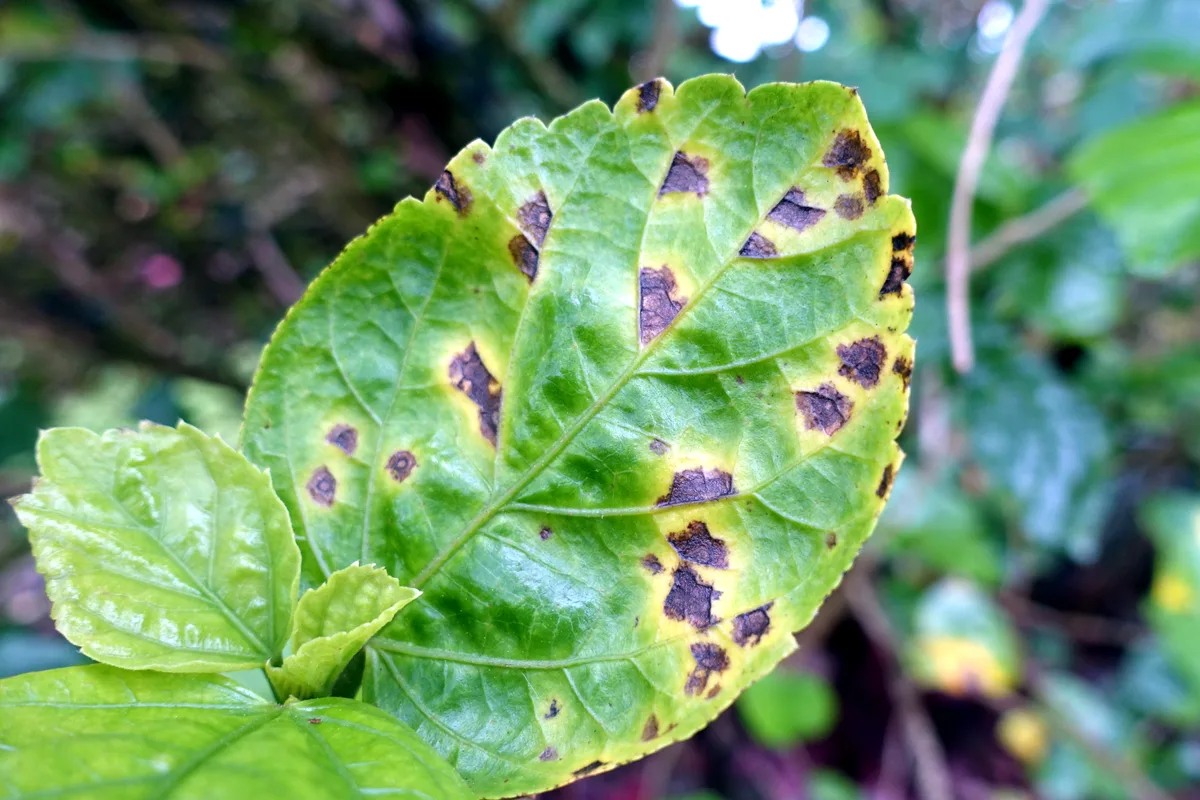
Why does this happen?
Rose black spot and tomato early blight are fungal problems that travel in splashing water. Spores land on wet leaves, take hold, and produce the dark spots, yellowing, and leaf drop gardeners notice in humid weather. Once a leaf is infected, the damage inside that leaf is done, which is why sprays that promise to erase spots disappoint and why removing infected leaves matters as much as spraying during each wet spell of the season.
Copper works as a surface protectant rather than a cure. A thorough coating leaves copper on healthy tissue, where it stops spores from starting a new infection. Coverage is what matters: undersides, inner growth, and new leaves all need it. Rain and new growth both thin the protection, so you need to repeat it through wet spells. Used this way, copper slows the spread while the plant grows clean foliage.
The fix, in order
Work down the list: free and cheap steps first. Stop when the plant turns the corner; the product is only for what the free steps cannot do.
Free step
Pick off and bin infected leaves first
Start by removing the worst spotted and yellowed leaves from roses and tomatoes, plus any fallen leaves under the plants. Bag them for the bin rather than composting, because home compost rarely gets hot enough to finish the fungus. This means fewer spores are left to splash onto clean growth during the next rain.
Free step
Water at the base and space the plants
Water the soil, not the foliage, and water early so leaves dry quickly. Prune lightly for air movement and avoid crowding new plants against infected ones. Dry leaves and better airflow do not cure the disease, but they remove the wet conditions the fungus needs to keep spreading from leaf to leaf.
The product step
Coat healthy growth with Bonide Captain Jack's Copper Fungicide
Spray healthy leaves thoroughly, including undersides, until surfaces are evenly covered following the label for roses and tomatoes. Begin before a wet spell where possible and repeat as the label directs after rain and as new growth appears. The aim is a protective coating on clean tissue, not heavy spraying of leaves already lost.
The product for this step
Bonide Captain Jack's Copper Fungicide
Habit step
Keep a weekly inspection through humid weather
Walk the beds weekly, remove fresh spotted leaves early, and note whether new growth is staying clean. A plant that keeps defoliating despite sanitation and protection may need a more resistant variety next season. Keep records of which varieties coped, because resistance is the long term answer in humid gardens.
The evidence, in tiers
Tier 1 · The method
The research describes copper as the standard garden centre answer for this fungal leaf spot group, used as a protectant: infected leaves are removed and binned, and healthy tissue is protected from new infection rather than cured.
Tier 2 · This product
Bonide Captain Jack's Copper Fungicide holds 4.2 stars from 997 reviews on Home Depot (November 2026).
We have not run a rose bed trial for this guide. The removal first, protect second method follows the protectant mechanism described in the research and the product label approach.
Tier 3 · What owners report
Owners who expected spotted leaves to turn green again rate the product down, while owners who removed infected foliage and protected new growth report the pattern the mechanism predicts: spread slows and fresh leaves stay cleaner through wet weather.
The alternatives, conceded where they win
| Option | What it is | The honest verdict |
|---|---|---|
| Bonide Captain Jack's Copper Fungicide | Ready to use copper protectant spray | The pick: a ready to use protectant that matches both rose black spot and tomato early blight, with a clear removal and recoat routine. |
| Picking off leaves and sanitation alone | Removal, binning, and dry foliage habits | Wins on cost and is the right start on a light infection caught early; it loses when wet weather keeps splashing spores onto unprotected new growth faster than leaves can be removed. |
| Replacing with resistant varieties | New rose or tomato varieties chosen for disease resistance | Wins as the long term answer in gardens where the disease returns every humid season; it loses as a rescue for plants already in the ground and producing this year. |
The honest price comparison
The honest comparison is losing and replacing established roses or a season of tomato plants, or paying for repeated garden help to strip and spray. A ready to use bottle and regular leaf removal cover the same protection work at home.
Where it falls short
These weaknesses come from the product's own reviews, not from a rival's marketing. Read them before you buy.
- It does not cure infected leaves, and owners expecting spots to disappear rate it down for that reason.
- Protection fades with rain and new growth, so one application in a wet spell is not enough.
- Thorough coverage takes time, especially on the undersides and inner growth where disease often starts.
- Repeated heavy use can build up copper in soil, so following the label matters more than spraying extra.
The product, in short
Bonide Captain Jack's Copper Fungicide
Questions people ask next
Will copper make black spots on leaves disappear?
No. Copper protects healthy tissue from new infection; it does not repair a leaf already infected. Remove spotted leaves, bin them, and judge success by whether new growth stays clean during the following wet weeks, not by whether old spots fade.
Should I compost the infected leaves I remove?
No. Put infected rose and tomato leaves in the bin rather than home compost. Typical home compost does not reliably reach the heat needed to finish the fungus, and returning that material to beds can return the problem with it next season.
Why do tomatoes and roses share one page?
The spotted leaf problems differ in detail, but the home routine is much the same: check the pattern, remove infected leaves, keep foliage dry where possible, and protect healthy growth with copper. One routine covers both plants.
When should I spray, before or after rain?
Protectant works best when it is already on healthy leaves before wet weather arrives. Rain can also thin the coating, so follow the label on repeating after wet spells and as new unprotected growth appears through the season.
Home Depot product record for Bonide Captain Jack's Copper Fungicide (November 2026) · Product label directions for copper fungicide use on roses and tomatoes
The Fix JournalCase 17Plants & Garden