Fire Ant Mounds in My Yard
A fire ant mound is the top of a colony that will move rather than die when it is merely disturbed. Killing the colony means treating each mound with a product the ants contact where they live, at the right moment, without scattering them first.
The short answer
For individual mounds in a yard people and pets use, Ortho Orthene Fire Ant Killer1 is the direct treatment with a deep record behind it. Apply it to each mound exactly as the label directs, without disturbing the mound first, and keep people and pets away until the treatment has settled. It holds 4.6 stars from 4,639 reviews on Home Depot (November 2026), with 90 percent of reviewers recommending it. Expect a strong chemical smell while it works; that complaint is documented and real.
Why does this happen?
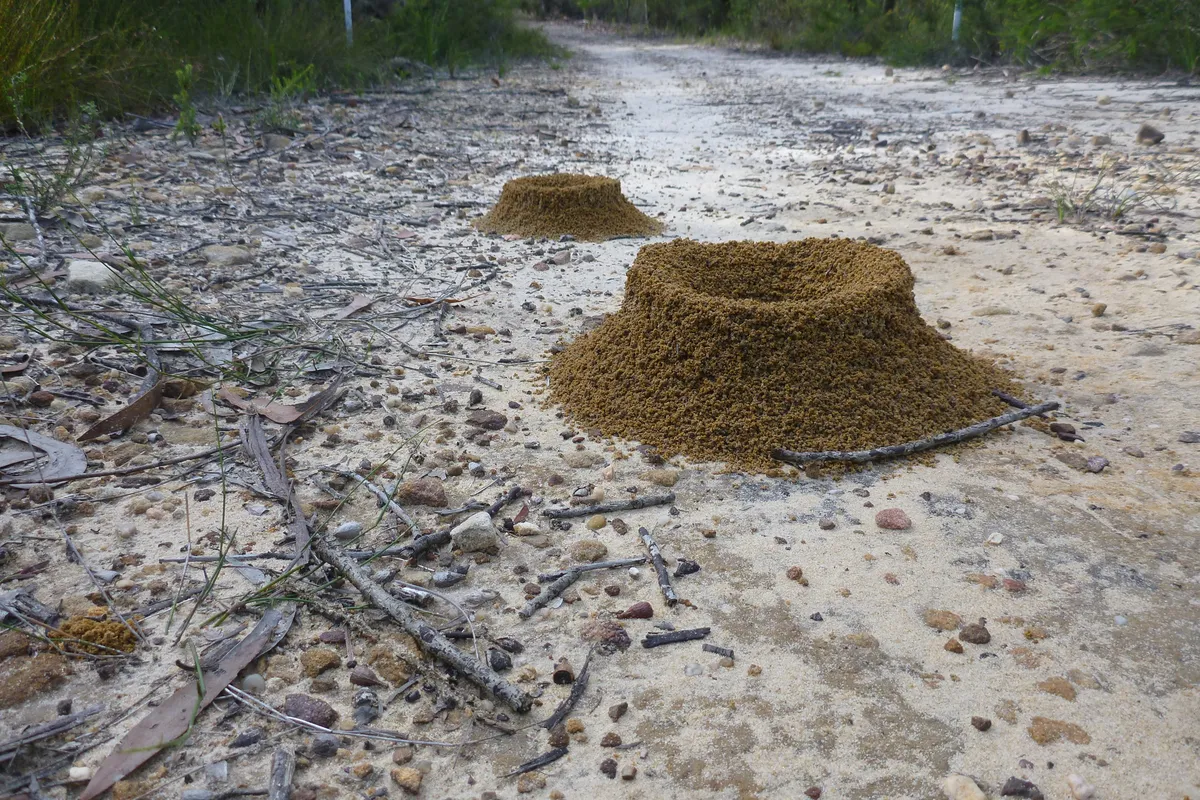
A mound is a doorway, not the colony. Below the loose soil sits a network with brood, workers, and at least one queen, and the colony survives any treatment that kills only the ants visible on the surface. Disturbing the mound before treating, by kicking it, flooding it, or digging into it, triggers the behavior that defeats most home attempts: the colony relocates, sometimes splitting, and new mounds appear nearby days later while the original patch looks quiet. A mound treatment works because the ants stay home and contact it where they live.
Timing and weather decide whether the treatment meets the colony. Ants move deeper in heat and come up after rain, and a treatment scattered by heavy rain or applied to a mound the colony has already abandoned is wasted. The extension guidance for fire ants sorts every yard into two problems: a handful of mounds, which suits individual mound treatment, and a yard full of them, which suits a broadcast bait the workers carry down to the queens. Choosing the wrong scale is the common failure. Treating thirty mounds one by one is slower than using bait, and baiting one mound by the patio steps is slower than treating it directly.
The fix, in order
Work down the list: free and cheap steps first. Stop when the plant turns the corner; the product is only for what the free steps cannot do.
Free step
Count the mounds before choosing a method
Walk the whole yard slowly and count active mounds, testing a doubtful one by watching for ants after a gentle touch to its edge with a stick. A few mounds point to individual treatment; a yard covered in them points to the broadcast bait route instead. This five minute count decides which product class the yard actually needs.
The product step
Treat each mound with Ortho Orthene, undisturbed
Apply Ortho Orthene Fire Ant Killer1 directly to each mound exactly as the label directs, approaching quietly and treating the mound as it stands. Do not kick, water, or dig the mound first: a disturbed colony relocates and the treatment lands on an emptying home. Work through the counted mounds in one session so no active colony is left to refill the treated ground.
The product for this step
Ortho Orthene Fire Ant Killer1
Free step
Leave treated mounds alone until settled
Keep children and pets away from treated mounds until the treatment has settled, as the record and label require, and resist checking by prodding the mound. A quiet surface is not proof either way in the first days. Judging too early and retreating a living mound wastes product; watch for fresh soil and ant traffic at a distance instead.
Habit step
Recheck after rain, when new mounds show
Fire ant pressure peaks in spring and fall, especially after rain, when colonies build up and new mounds become visible. Walk the yard after wet spells and treat new mounds while they are small and few. A yard in fire ant country needs this routine repeated; it is not cured once and for all. The regular walk is cheaper than dealing with a bad sting later.
The evidence, in tiers
Tier 1 · The method
Extension services teach the two step approach for fire ants: broadcast bait for yard wide pressure and individual mound treatment for a small number of mounds, with mound treatments used strictly to label directions. The method here follows that guidance and its central warning, that disturbed colonies relocate.
Tier 2 · This product
Ortho Orthene Fire Ant Killer1 holds 4.6 stars from 4,639 reviews on Home Depot (November 2026), with 90 percent of reviewers recommending it.
We have not treated a test mound for this guide. The protocol follows extension two step guidance and the product label rather than our own staged trial.
Tier 3 · What owners report
Owners report fast, visible results on treated mounds and two recurring complaints: the strong chemical smell while the product works, which many mention even in positive reviews, and mounds that reappear nearby when the colony was disturbed first or when only some of the yard mounds were treated.
The alternatives, conceded where they win
| Option | What it is | The honest verdict |
|---|---|---|
| Ortho Orthene Fire Ant Killer1 | Direct treatment of individual mounds | The pick for a yard with a handful of mounds: it acts on the colony in place, and its review record is deep and strong. |
| Broadcast fire ant bait | Granules workers carry down to the queens | Wins clearly when mounds are too many to treat one by one: bait covers the whole yard and reaches colonies with no visible mound. It loses on speed for the single mound by the steps, where a direct treatment settles the problem sooner. |
| Boiling water or digging the mound out | Heat and mechanical destruction | Wins on having no chemical in the yard at all, which matters to some households. It loses on the colony: surface destruction scatters survivors, the queen usually survives below, and the mound reappears nearby, which is the relocation pattern extension guidance warns about. |
The honest price comparison
The honest comparison is one container treating the mounds a yard actually has against a professional pest service visit for the same mounds, or against the cost of a child or a dog learning about an untreated mound by stepping in it. For a few mounds, the container and one careful session cover the problem the visit would be booked for.
Where it falls short
These weaknesses come from the product's own reviews, not from a rival's marketing. Read them before you buy.
- The chemical smell is strong and widely documented in its own reviews, including from owners who rate it well; a household sensitive to odor should expect it, not discover it.
- Treated mounds are not a place for children or pets until the treatment has settled, which takes planning in a yard whose whole point is being used by both.
- It treats the mounds it touches and nothing else: skip active mounds in the same yard and the pressure returns from the colonies that were left alone.
The product, in short
Ortho Orthene Fire Ant Killer1
Questions people ask next
Why did a new mound appear next to the treated one?
Relocation is the usual answer. A colony disturbed before or during treatment, or only partly exposed to it, moves and rebuilds nearby. Treating every active mound in one session, without disturbing them first, is how the cycle is avoided next time.
How many mounds mean I should switch to bait?
When the count stops being a handful you can walk in one session, the scale has changed. Extension guidance puts yard wide pressure on broadcast bait, which workers carry to the queens, and keeps mound treatment for the few that matter most.
Is it safe around my dog?
Not around a treated mound until the treatment has settled, and the label directions govern the details. Keep the dog off treated ground for that period. For a yard where that separation is impossible, bait applied to label directions is the conversation to have instead.
When is the best time to treat?
When ants are active near the surface and rain is not about to wash the treatment off the mound: mild weather, often after rain has brought colonies up and building. Treating a mound the colony has abandoned, or ahead of a downpour, wastes the application.
Home Depot product record for Ortho Orthene Fire Ant Killer1 (November 2026) · Extension service guidance on the two step fire ant method
The Fix JournalCase 09Plants & Garden