Ticks in My Yard: Treat the Mouse, Not the Lawn
The blacklegged ticks that bite people usually picked up Lyme disease as nymphs feeding on white footed mice, not from deer. Treating the mouse with tick control tubes breaks the infection cycle in the yard without spraying the whole property.
The short answer
Thermacell Tick Control Tubes aim at the right animal. Placed where mice actually travel, along walls, woodpiles, and stone edges, the tubes treat the hosts that infect young ticks, and they hold 4.7 stars from 1,870 ratings on the Thermacell store (November 2026). The limit is in the record too: where deer dominate a property, some owners report tubes sitting untouched and ticks arriving by a route the mice never touch. Placement, and judging your property correctly, decide whether this works.
Why does this happen?
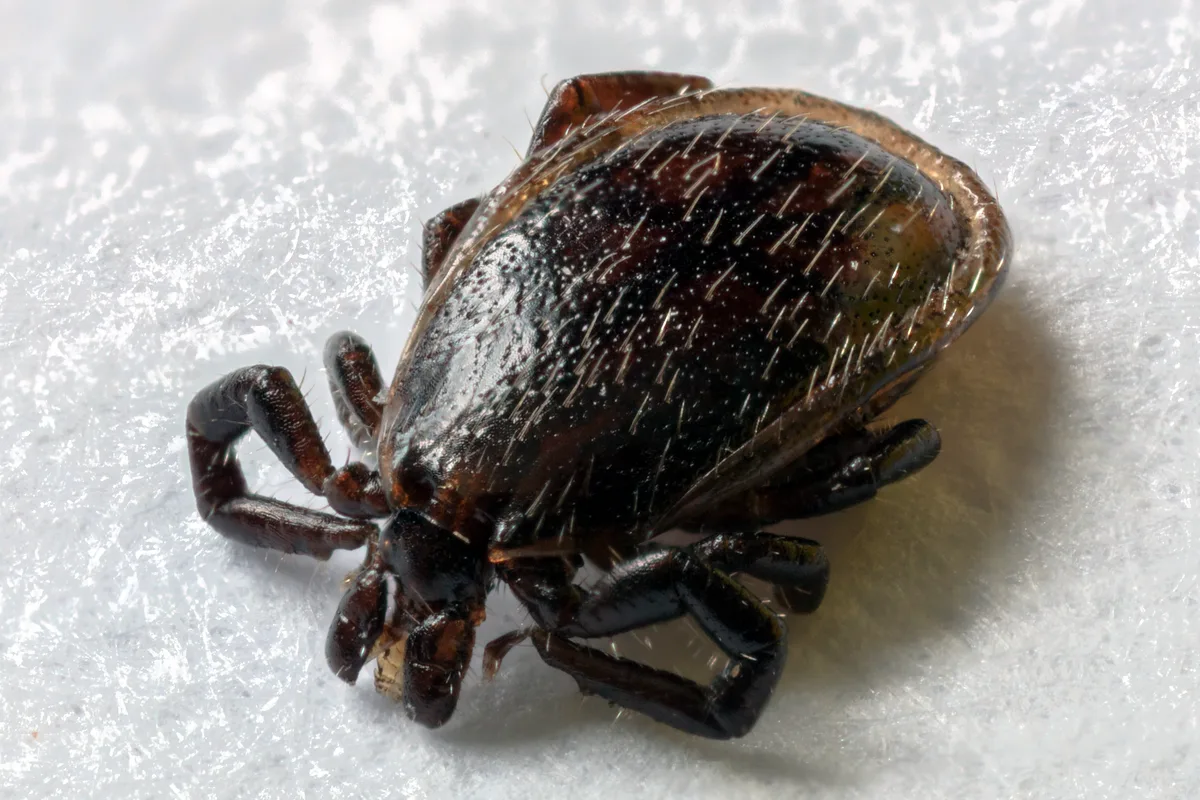
The tick that matters is the nymph: tiny, hard to see, and responsible for most Lyme infections precisely because it feeds unnoticed. A nymph becomes infected in its earlier larval stage, and the host it fed on then was usually a white footed mouse, a highly efficient reservoir for the Lyme bacterium. Deer come into the story later: adult ticks feed and mate on deer, and deer move ticks around, which is why deer get the blame. But spraying a yard for the deer route leaves the mouse cycle — the one producing infected nymphs in the leaf litter — completely untouched.
Tick tubes intervene in that cycle at the nest. Mice are compulsive collectors of nesting material; they find the treated material in the tubes, carry it home, and live in contact with it, so the ticks that climb onto the mouse to feed are killed. Over a season, most yard larvae never become infected nymphs. The method depends on mice actually using the tubes, which is a placement problem. Tubes along foundations, stone walls, woodpiles, and shed edges, where mice travel, get emptied. Tubes placed for convenience in open lawn are never used. Where deer, not mice, dominate tick traffic, the record shows tubes can sit untouched and disappoint.
The fix, in order
Work down the list: free and cheap steps first. Stop when the plant turns the corner; the product is only for what the free steps cannot do.
Free step
Read the property for mice and deer
Before spending, walk the edges: foundations, stone walls, woodpiles, sheds, and dense ground cover are mouse country, and droppings or runways confirm it. Then judge the deer traffic honestly. A suburban yard with mice and occasional deer is tube territory; open land with daily deer movement is a different problem, and knowing which yard you have decides whether this purchase makes sense.
The product step
Place Tick Control Tubes where mice travel
Set Thermacell Tick Control Tubes along the mouse routes found in the walk: against foundations, along stone walls and woodpiles, and at shed edges, at the spacing the product directs. The mice must find the material and carry it home; a tube placed in open lawn for checking will be ignored, and an untouched tube in the right cover is worth more than a row in the wrong place.
The product for this step
Thermacell Tick Control Tubes
Free step
Check the tubes and read the result honestly
Over the following weeks, check whether tubes are being emptied: used tubes are the method working, because the material is in a nest killing ticks. Tubes sitting full in a yard with heavy deer traffic are the documented failure pattern. Move them once to better mouse cover, then reconsider the approach if they still sit untouched.
Habit step
Keep up the edges and the personal checks
Mow the yard edges, clear leaf litter from play and seating areas, and keep woodpiles tidy, since ticks wait in damp cover at the borders. Continue tick checks after yard time for people and dogs as a standing habit. Tubes reduce the infected nymph population over seasons; they do not make any single afternoon tick free, and the check is the backstop.
The evidence, in tiers
Tier 1 · The method
The host mechanism is the established account of Lyme transmission: larval blacklegged ticks acquire the infection feeding on reservoir hosts, principally white footed mice, and the resulting infected nymphs are the stage that most often bites people. Treating the nest environment of that host follows directly from the mechanism.
Tier 2 · This product
Thermacell Tick Control Tubes hold 4.7 stars from 1,870 ratings on the Thermacell store (November 2026), with large review sets across its pack sizes supporting the same picture.
We have not run a season long tick drag count for this guide. The placement guidance follows the host mechanism and the patterns, good and bad, in the product record.
Tier 3 · What owners report
Owners in mouse rich suburban yards report tubes emptied steadily and fewer ticks found on the family and the dog over the season. The critical pattern is equally specific: properties with heavy deer pressure report untouched tubes and unchanged tick numbers, which matches the mechanism, since deer delivered ticks never meet a treated mouse.
The alternatives, conceded where they win
| Option | What it is | The honest verdict |
|---|---|---|
| Thermacell Tick Control Tubes | Treated nesting material targeting mice | The pick for the typical suburban yard: it attacks the infection cycle itself, with no spray on the lawn, play areas, or garden, and a strong rating record behind it. |
| Yard wide tick spray | Sprayed treatment across lawn and borders | Wins where deer pressure dominates or an immediate knockdown is needed before an event: it acts on ticks present now, wherever they wait. It loses on breadth, treating the whole yard including play areas, and on the mouse cycle, which resumes manufacturing infected nymphs between applications. |
| Habitat changes only | Mowing, litter clearing, and border management | Wins on costing nothing and helping every method work better; dry, tidy borders are genuinely poor tick habitat. It loses as a sole defense in an infested yard, because it reduces encounters without reducing the infected population the mice maintain. |
The honest price comparison
The honest comparison is packs of tubes placed twice in a season against repeated professional spray visits for the same property, or against the cost, medical and otherwise, of one Lyme infection in the family. The tubes are the modest line item in that company, provided the property is the mouse driven kind they are built for.
Where it falls short
These weaknesses come from the product's own reviews, not from a rival's marketing. Read them before you buy.
- Where deer pressure dominates, the record shows tubes can sit untouched while ticks keep arriving on deer, a route this method does not touch at all.
- It works at the speed of a life cycle, not a weekend: the benefit builds across a season as treated nests stop producing infected nymphs, which impatient buyers misread as failure.
- Placement is unforgiving: tubes set where people find them convenient rather than where mice travel are simply not collected, and an unused tube does nothing.
The product, in short
Thermacell Tick Control Tubes
Questions people ask next
Why treat mice when deer carry the ticks?
Deer carry adult ticks, but the infection is picked up earlier, when larval ticks feed on white footed mice. The infected nymphs that bite people come from the mouse stage. Treating mice attacks the infection. Chasing deer only attacks how ticks travel, and how they travel is not what makes a tick dangerous.
How do I know the tubes are working?
The first sign is physical: tubes being emptied means mice are carrying the treated material to their nests, which is the mechanism. The result, fewer ticks found on people and pets, builds over the season. Full tubes after weeks in place mean a placement problem or a deer dominated property.
Are they safe around my garden and pets?
Nothing is sprayed on the lawn, garden, or play areas; the treatment sits inside tubes placed in mouse cover and is carried to nests. Follow the product directions for placement around the property, and keep normal tick checks for pets, since no yard method removes the need for them.
My yard has heavy deer traffic. Should I skip tubes?
Probably, as the main defense. The record pattern is clear that deer dominated properties are where tubes disappoint, because those ticks arrive on deer and never meet a mouse. A spray based approach, or professional advice for the property, fits that yard better, with habitat work supporting either route.
Thermacell store product record for Tick Control Tubes (November 2026) · CDC material on blacklegged tick hosts and Lyme transmission
The Fix JournalCase 13Plants & Garden