Poison Ivy Taking Over the Yard
Poison ivy spreads by roots and stems that survive casual pulling, and its oil stays active even after the plant dies. A systemic brush killer containing triclopyr kills the plant through the foliage first, then the dead growth is removed with full skin protection.
The short answer
Learn the 'leaves of three' pattern, spray actively growing poison ivy thoroughly with Bonide Poison Ivy & Brush Killer BK-32, and let the plant die fully before handling it. It holds 4.3 stars from about 1,042 reviews on Home Depot (November 2026). Never burn the dead growth, because smoke can carry the oil.
Why does this happen?
Poison ivy is a perennial that spreads above ground by vines and below ground by roots and stems. Pulling the visible growth often leaves pieces that sprout again, and every part of the plant carries urushiol, the oil that causes the rash. That oil does not vanish when the plant dies, so a patch can stay hazardous long after the leaves have withered and the stems look harmless. The patch often spreads along fences, trees, and shaded edges nearby.
A systemic herbicide such as triclopyr is absorbed through the leaves and moves through the plant, reaching roots that contact sprays and mowing miss. That movement is slow, so the plant needs time to die completely before removal. Rushing to pull half dead growth spreads fragments and exposes skin. The safer order is identify, treat, wait for full dieback, then remove the dead material carefully and bag it. Patience at this stage saves a second season of work.
The fix, in order
Work down the list: free and cheap steps first. Stop when the plant turns the corner; the product is only for what the free steps cannot do.
Free step
Confirm the plant before touching anything
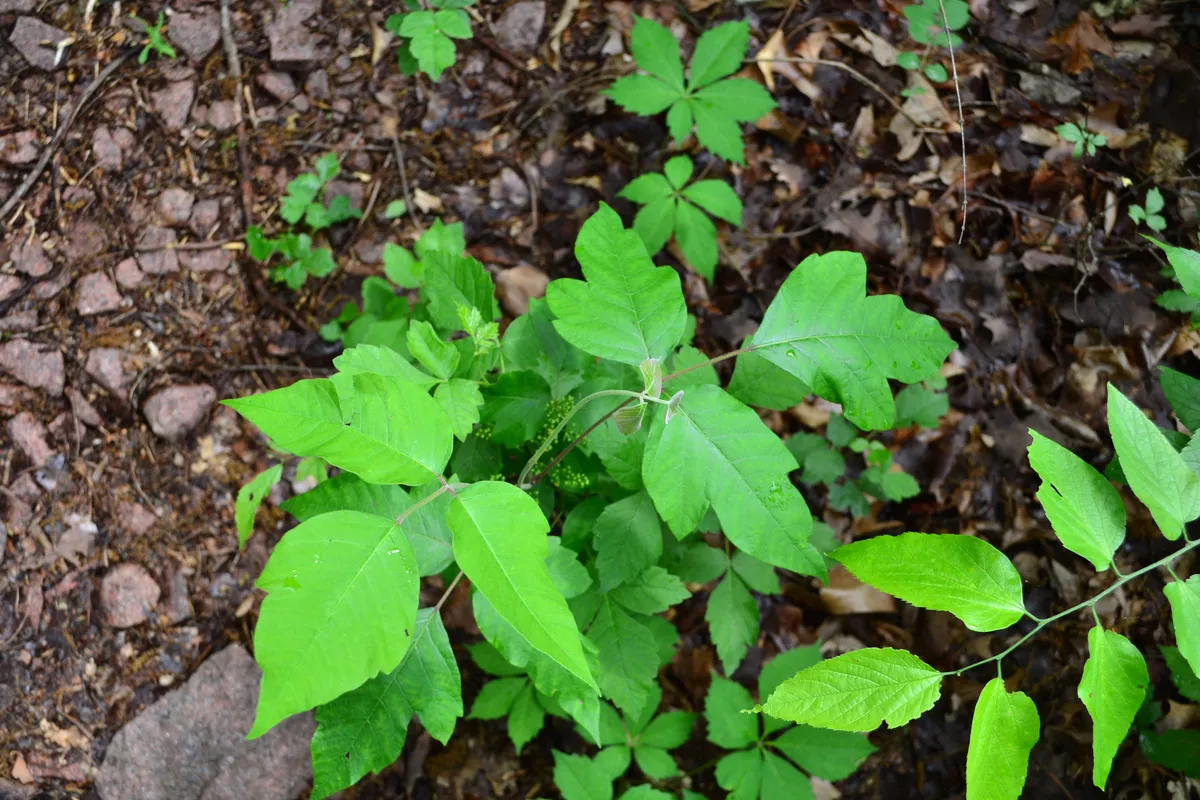
Check for the classic leaves of three pattern, with leaflets that can be glossy or dull and vines that may climb, sprawl, or form a low patch. Photograph doubtful growth from a distance rather than handling it. Misidentification cuts both ways: harmless plants get sprayed and real poison ivy gets pulled by bare hands.
The product step
Spray growing foliage with Bonide Poison Ivy & Brush Killer BK-32
Mix the concentrate as the label directs and coat the leaves of actively growing poison ivy thoroughly, keeping spray off desirable plants and away from tree root zones. Choose calm weather to limit drift. Triclopyr needs leaf uptake and time to move to the roots, so do not mow or pull the patch right after spraying.
The product for this step
Bonide Poison Ivy & Brush Killer BK-32
Free step
Wait for complete dieback before removal
Leave the treated patch alone until leaves and stems are fully dead, which can take longer than the first browning suggests. Living green tissue under dead tops means the roots may still survive. A second application on regrowth, as the label directs, is more useful than early pulling that breaks roots into pieces that sprout again.
Habit step
Bag dead growth and watch for regrowth
Wearing protective clothing and gloves, bag dead vines and roots for disposal rather than composting, and wash tools and gloves when finished. Check the patch through the season and spot treat small regrowth early, while it has few leaves and shallow roots, instead of letting the patch rebuild for another year.
The evidence, in tiers
Tier 1 · The method
The research protocol is systemic first for poison ivy, using triclopyr brush killer language from the label, followed by careful removal after death because dead roots still carry urushiol and burning can carry the oil in smoke.
Tier 2 · This product
Bonide Poison Ivy & Brush Killer BK-32 holds 4.3 stars from about 1,042 reviews on Home Depot (November 2026).
We have not treated a yard patch for this guide. The identify, treat, wait, then remove order follows the systemic mechanism and the safety rules named in the research.
Tier 3 · What owners report
Owners report the best results when they sprayed growing foliage and waited for full dieback, and the familiar failures when they pulled too soon, sprayed in drift, or expected woody regrowth to die from a single light pass.
The alternatives, conceded where they win
| Option | What it is | The honest verdict |
|---|---|---|
| Bonide Poison Ivy & Brush Killer BK-32 | Triclopyr concentrate for brush and poison ivy | The pick: a systemic concentrate that reaches roots, which is the part of poison ivy that makes pulling alone fail. |
| Pulling and digging by hand | Manual removal with protective clothing | Wins for a few small seedlings in soft soil where every root comes out intact; it loses on an established patch, where broken roots and stems regrow and skin exposure is hardest to avoid. |
| Boiling water or smothering small patches | Heat or covering for isolated plants | Wins on a tiny patch far from other planting where no spray is wanted; it loses on a spreading yard patch with climbing vines and deep roots, where coverage and follow through are hard to maintain. |
The honest price comparison
The honest comparison is a professional brush clearing visit, or repeated seasons of pulling a patch that keeps returning from its roots. One concentrate bottle, protective clothing, and patience cover the home version of the same systemic job.
Where it falls short
These weaknesses come from the product's own reviews, not from a rival's marketing. Read them before you buy.
- It is slow: systemic kill and full dieback take time, and impatient removal undermines the result.
- Spray drift and root zone exposure can harm desirable trees and shrubs, so placement discipline is part of the job.
- Dead growth remains a skin hazard because the oil persists, which surprises owners who treat bare stems as safe.
- Established woody patches can need a repeat application on regrowth rather than ending with one spray.
The product, in short
Bonide Poison Ivy & Brush Killer BK-32
Questions people ask next
Why not just pull poison ivy out?
Established poison ivy regrows from roots and stem pieces left in the soil, and pulling maximises skin contact with the oil. A systemic spray kills through the foliage to the roots first, making the later removal of fully dead growth safer and more complete.
Can I burn the dead vines to get rid of them?
No, never burn poison ivy, living or dead. Smoke can carry urushiol and expose skin, eyes, and lungs. Bag dead vines, roots, and stems and dispose of them with household waste where local rules allow, wearing gloves throughout.
How long does the oil stay active on dead plants?
Urushiol is persistent and can remain active on dead plant material, tools, gloves, and clothing for a long time. Treat dead growth as hazardous, wash equipment, and store contaminated gloves away from bare hand use until they are cleaned or replaced.
What if it is growing up a tree I want to keep?
Avoid spraying into the tree canopy and keep brush killer away from the root zone as the label directs. Cut climbing vines carefully with protection and treat the regrowth at ground level, rather than soaking bark and foliage of the tree itself.
Home Depot product record for Bonide Poison Ivy & Brush Killer BK-32 (November 2026) · Product label directions for triclopyr brush killer use
The Fix JournalCase 18Plants & Garden