My Succulents Are Stretching Out and Going Leggy
Etiolated succulents and other houseplants stretching toward the light
The short answer
Stretched growth never grows back, so the fix runs in two parts: give the plant real light now so new growth comes in compact, and behead the worst rosettes once they are growing strongly again. The GE Grow Light PAR38 holds 4.6 stars from 268 reviews at Blain's Farm and Fleet (November 2026), and its output was independently measured at PPF 50 micromoles per second in the Space Buckets lab notes. That measurement is why this bulb, and not a novelty purple wand, is the recommendation.
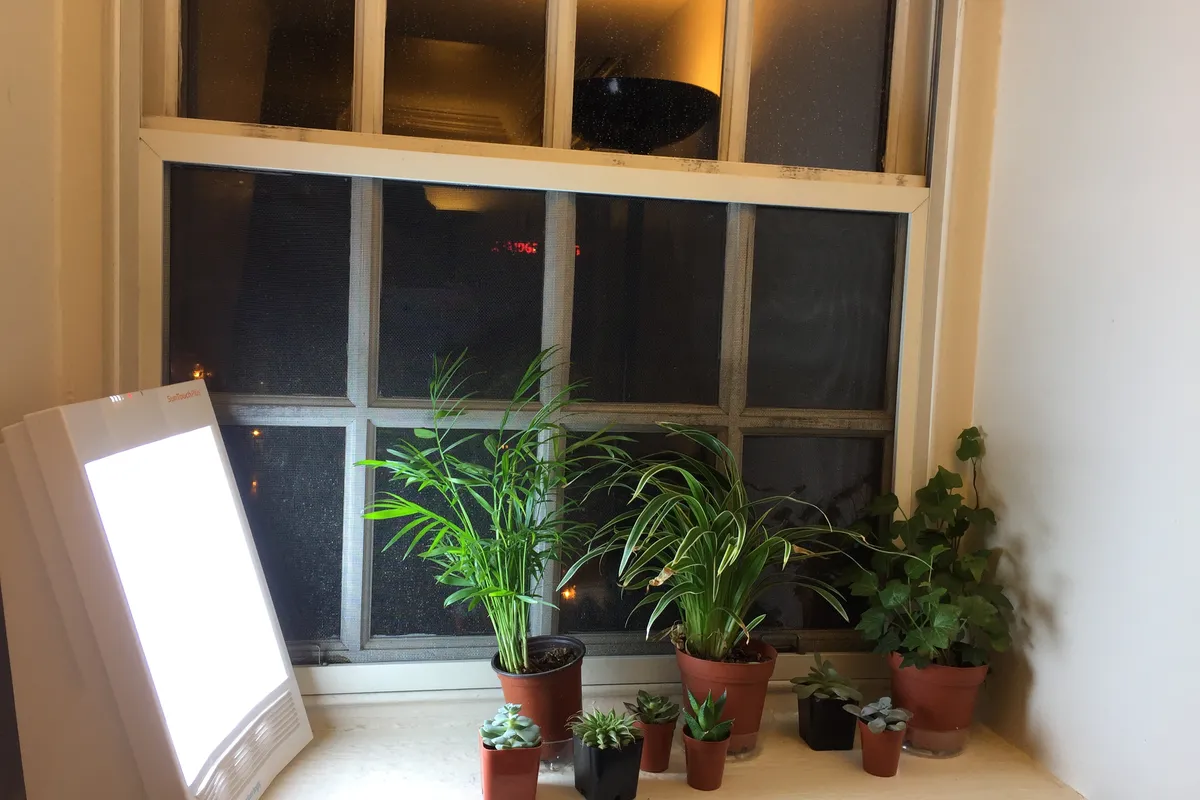
Why does this happen?
Stretching like this (called etiolation) is caused by too little light. When a succulent cannot get enough light, the stem grows longer between the leaves as it stretches toward the light, and the new leaves come in pale and widely spaced.
A windowsill is weaker than it looks. Glass cuts intensity, winter shortens the day, and a plant a few feet back from the glass may be getting a tenth of what the same spot delivers outdoors in summer.
The stretched stem stays stretched. Light fixes the growth that has not happened yet; the leggy part is permanent unless it is cut and re-rooted. That is why this fix has two parts: better light, and cutting back the stretched growth.
The fix, in order
Work down the list: free and cheap steps first. Stop when the plant turns the corner; the product is only for what the free steps cannot do.
Free step
Move and rotate first
Put the plant in the brightest window you have, touching the glass if the plant tolerates it, and rotate the pot a quarter turn every few days so growth stays even. This costs nothing and tells you within two weeks how much of the problem is placement.
Free step
Behead the worst rosettes
Once new growth is arriving compact, cut the rosette with an inch of stem, let the cut end callus for a few days, and set it on dry soil to re-root. The stump usually pushes out offsets. Leaves pulled cleanly from the stem root as spares.
The product step
Add the measured bulb
Put the GE Grow Light PAR38 in a clamp or desk lamp 6 to 12 inches above the plants and run it 12 to 14 hours a day. Judge it only by new growth: compact rosettes over the next four to eight weeks.
The product for this step
GE Grow Light PAR38 LED bulb
The evidence, in tiers
Tier 1 · The method
The method follows university extension guidance on etiolation: the cause is light quantity, the cure is hours and closeness, and damaged growth is pruned rather than reversed. The bulb's output figure comes from the Space Buckets lab notes, an independent measurement source named as such, and the bulb is UL listed.
Tier 2 · This product
GE Grow Light PAR38 holds 4.6 stars from 268 reviews at Blain's Farm and Fleet (November 2026) and 4.9 stars from 25 reviews at RONA (November 2026). We have not grown a succulent under this bulb for this guide, and no claim is made here that we have. The recommendation rests on the measured output and the retailer record, which agree with each other.
Without a light meter, output claims are hard to check at home, which is why the pick is a bulb with an independent measurement on record, not the brightest sounding listing. New growth is the home test.
Tier 3 · What owners report
Owners of measured grow bulbs report the pattern the cause predicts: stalled and stretching plants restart once hours and distance are consistent, and most of the disappointed reviews come from bulbs hung too far away or run for only a few hours a day. Distance is the mistake made most often.
The alternatives, conceded where they win
| Option | What it is | The honest verdict |
|---|---|---|
| GE Grow Light PAR38 | Measured full spectrum bulb, standard socket | The pick: output verified by an independent lab note, not by the box. |
| Purple wand and strip lights | Thin LED strips on goosenecks | Cheerful and cheap, but output is rarely measured and usually weak at plant distance. |
| Full spectrum panel light | A hanging or standing grow panel | Stronger and wider coverage, and the right answer for a whole shelf; more money, and it takes up more room than one plant group needs. |
| The brightest window alone | Placement, no product | Free, and enough in a true south window in summer; winter and set back rooms are where it fails. |
The honest price comparison
If new growth is still stretching after six weeks at 12 hours a day, the bulb is too far away. Halve the distance before buying anything stronger.
Where it falls short
These weaknesses come from the product's own reviews, not from a rival's marketing. Read them before you buy.
- The bulb needs a lamp or fixture; the purchase is the bulb only.
- Full spectrum white light is bright in a living space, and not everyone wants a grow lamp's look on a shelf.
- One bulb covers a small group of plants, not a collection.
- There is no timer built in; the 12 to 14 hour day is yours to schedule or automate.
The product, in short
GE Grow Light PAR38 LED bulb
Questions people ask next
Will the stretched parts shrink back?
No. Stretched stem and spaced leaves are permanent. Light changes the growth that comes next, and beheading restarts the worst rosettes from a compact head.
How close should the bulb be?
Start at 6 to 12 inches above the plant tops. Closer is stronger; if leaves blanch or crisp at the center, back off a few inches.
How many hours a day?
Twelve to fourteen hours is the working range for succulents that are recovering. A cheap outlet timer keeps the schedule for you.
Can I behead any succulent?
Rosette types like echeveria take it well. Let the cut callus before replanting, keep the cutting dry until roots show, and keep the stump: it usually produces offsets.
Space Buckets lab notes: independent PPF measurement of the GE Grow Light PAR38 · Blain's Farm and Fleet listing record (November 2026) · University extension guidance on etiolation and houseplant light · GE Lighting grow light product documentation
The Fix JournalCase 29Plants & Garden